
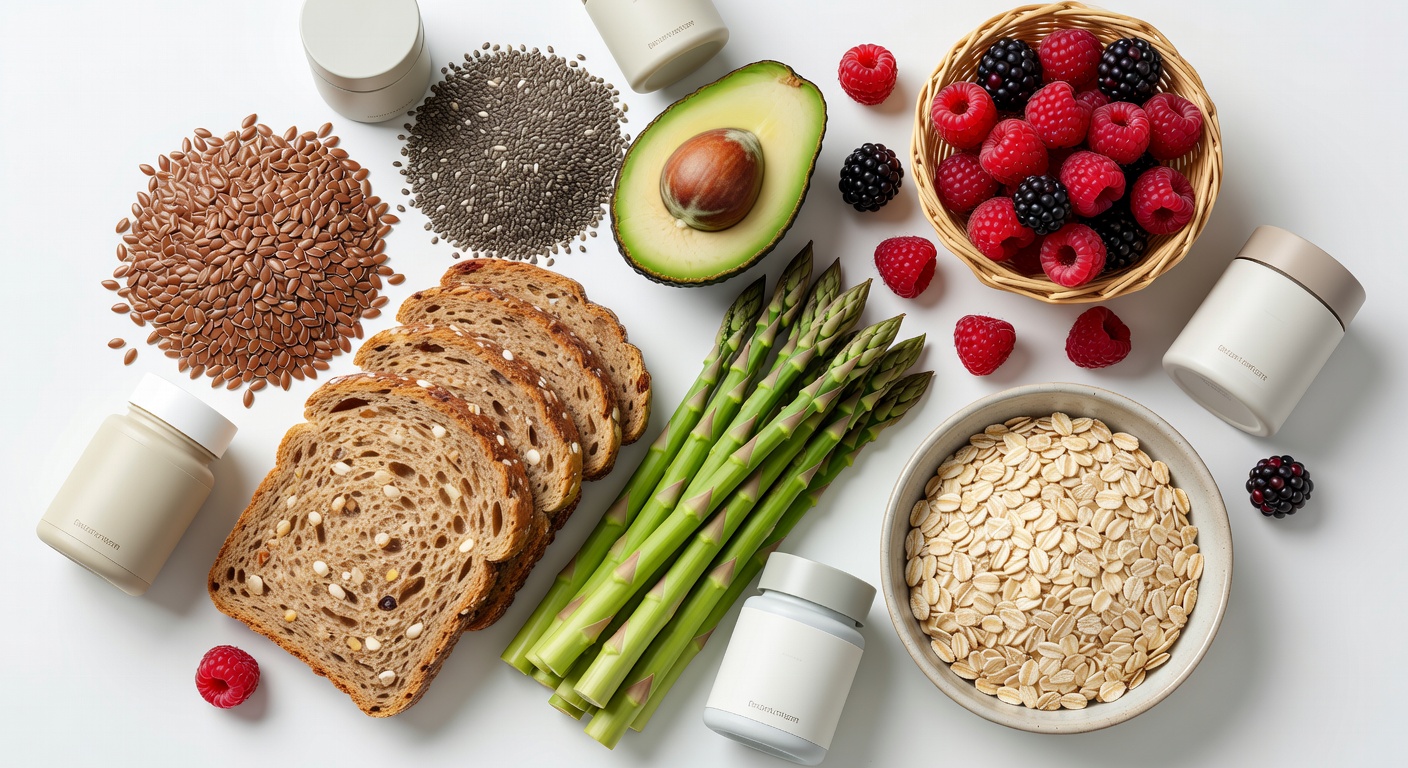
Why Fiber Supplementation Supports Digestive Health
Most adults consume only about 15g of fiber daily, far below the recommended 25-38g. Adequate fiber intake is essential for maintaining healthy digestion, regular bowel movements, balanced gut microbiome, and even cardiovascular health. Fiber supplements can bridge this gap effectively when whole-food sources alone are insufficient.
There are two main types of fiber: soluble fiber (which dissolves in water and forms a gel-like substance) and insoluble fiber (which adds bulk to stool). The best fiber supplements provide a balance of both or target specific digestive needs. Here are our top five picks for 2026.
Our Top 5 Fiber Supplements for Digestive Health
1. Metamucil Premium Blend Psyllium Fiber
Metamucil is the most recognized fiber supplement brand, and their Premium Blend uses 100% natural psyllium husk. Psyllium is a soluble fiber that forms a viscous gel in the gut, promoting regularity, lowering cholesterol, and supporting healthy blood sugar levels.
- Clinically proven psyllium husk fiber
- Supports heart health and cholesterol levels
- Multiple flavors available
- Fine texture mixes well
- Contains sugar or artificial sweeteners depending on version
- May cause bloating during initial use
- Requires adequate water intake
2. Benefiber Original Prebiotic Fiber
Benefiber uses wheat dextrin, a soluble prebiotic fiber that dissolves completely in beverages without altering taste, texture, or color. This makes it the most versatile option for people who dislike the thickness of psyllium-based supplements.
- Completely dissolves without altering taste
- Prebiotic benefits for gut microbiome
- Can be added to any food or drink
- Taste-free and texture-free
- Lower fiber per serving than psyllium
- Wheat-derived (not suitable for celiac/gluten-free)
- Limited insoluble fiber content
3. Garden of Life Raw Organic Fiber
This organic fiber blend combines 15 raw superfoods including flax, chia, and sprouted seeds to deliver both soluble and insoluble fiber. It provides 9g of fiber per serving along with omega-3 fatty acids and protein from its whole-food ingredients.
- Organic whole-food fiber blend
- Both soluble and insoluble fiber
- Includes omega-3s and protein
- No artificial ingredients
- Earthy taste may not suit everyone
- Thicker texture than pure psyllium
- Higher calorie content per serving
4. Heather’s Tummy Fiber Organic Acacia Senegal
Specifically formulated for people with sensitive digestive systems, including those with IBS. Acacia senegal fiber is a prebiotic soluble fiber that ferments slowly in the gut, reducing the gas and bloating commonly associated with other fiber supplements.
- Gentle on sensitive stomachs and IBS-friendly
- Slow fermentation reduces gas and bloating
- Organic and pure (single ingredient)
- Prebiotic benefits for gut flora
- Lower fiber content per serving (6g)
- Higher price per serving
- Mild taste but not completely flavorless
5. NOW Foods Psyllium Husk Capsules
For those who cannot tolerate the texture of powdered fiber supplements, NOW Foods offers psyllium husk in convenient capsule form. Each serving of three capsules provides 1.5g of fiber, making it easy to take throughout the day.
- Convenient capsule form (no mixing)
- No taste or texture issues
- Affordable price point
- Can take throughout the day
- Lower fiber per serving (need multiple capsules)
- Capsules are large
- Less cost-effective than powder per gram of fiber
How We Evaluated These Fiber Supplements
Our evaluation considered the following factors:
- Fiber Type and Content: We assessed whether the product provides soluble, insoluble, or both types of fiber, and the amount per serving relative to daily needs.
- Digestive Tolerability: We prioritized supplements that minimize common side effects like gas, bloating, and cramping, especially for people with sensitive digestive systems.
- Prebiotic Benefits: We favored fibers that serve as prebiotics, nourishing beneficial gut bacteria for broader digestive health benefits.
- Versatility and Ease of Use: We evaluated taste, texture, mixability, and form (powder vs. capsule) to ensure products fit easily into daily routines.
- Ingredient Quality: We preferred organic, non-GMO products with minimal additives, artificial sweeteners, or fillers.
Frequently Asked Questions
How Much Fiber Should I Take Per Day?
The recommended daily fiber intake is 25g for women and 38g for men. If your diet provides some fiber, a supplement delivering 5-10g daily can help bridge the gap. Start with a low dose and gradually increase to avoid digestive discomfort.
Should I Take Fiber Supplements With or Without Food?
Fiber supplements can be taken with or without food, but taking them 30 minutes before a meal may help with appetite control and blood sugar management. Always drink a full glass of water (8 oz minimum) with fiber supplements to prevent intestinal blockage.
Will Fiber Supplements Cause Bloating?
Some initial bloating is common when starting fiber supplementation, but this typically subsides within 1-2 weeks as your digestive system adapts. Start with half the recommended dose and gradually increase over 1-2 weeks. Choosing slowly-fermenting fibers like acacia can minimize this effect.
Can Fiber Supplements Interfere With Medications?
Yes, fiber supplements can reduce the absorption of certain medications by binding to them in the digestive tract. Take fiber supplements at least 2 hours before or after medications. Consult your pharmacist if you take thyroid medications, blood thinners, or diabetes medications.
Is It Better to Get Fiber From Food or Supplements?
Whole foods are the preferred source of fiber because they provide additional nutrients, vitamins, and phytochemicals. However, fiber supplements are a practical and effective way to bridge the gap when dietary fiber intake is insufficient. Ideally, use supplements to complement a fiber-rich diet, not replace it.
Stay Updated With Evidence-Based Nutrition Tips
Join our newsletter for the latest supplement research, exclusive deals, and AI-powered nutrition insights delivered to your inbox.
📬 Get Science-Backed Nutrition Tips
Join our newsletter for weekly AI-powered nutrition insights.
Leave a Reply