
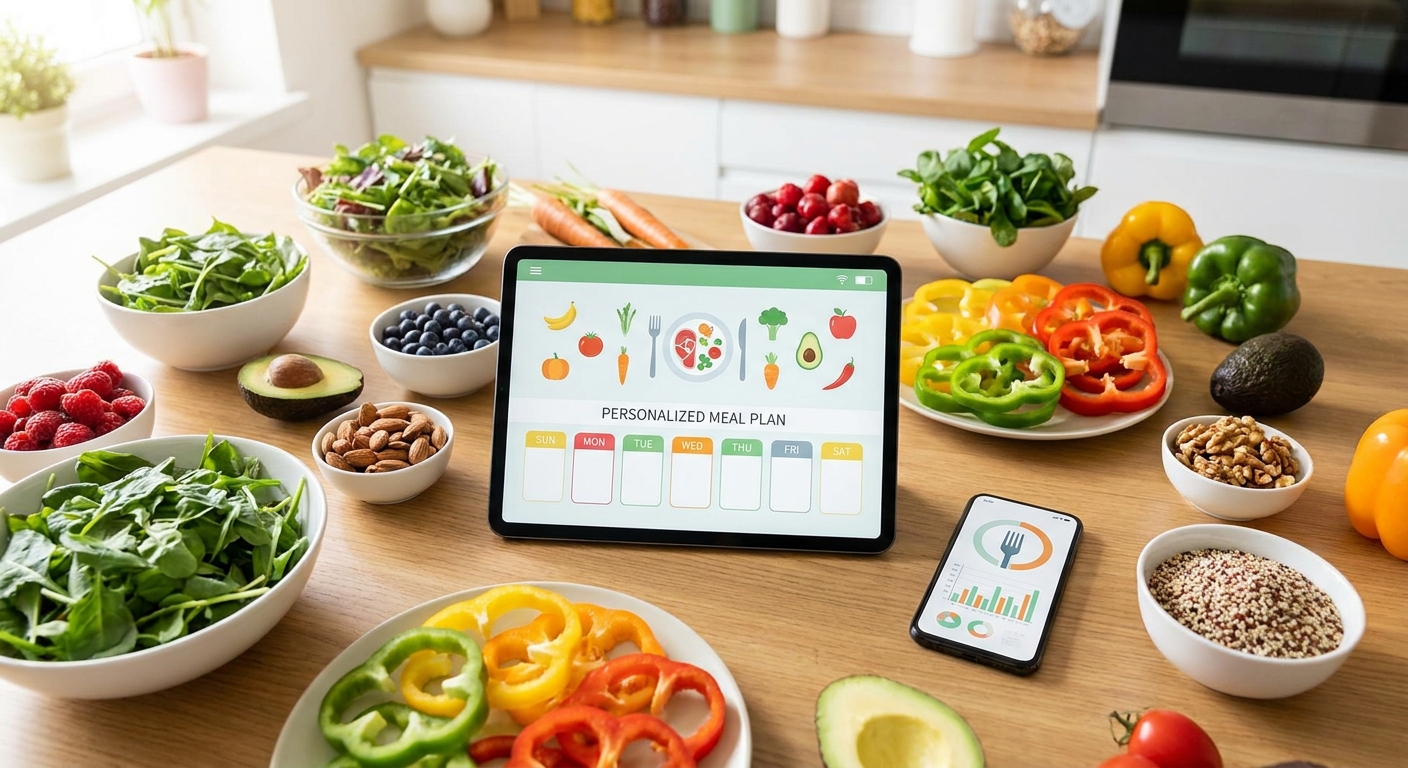
<h1>How AI Meal Planning Apps Are Changing Personalized Nutrition</h1>

<p>According to industry analyses, the global AI-driven meal planning apps market is projected to grow from approximately USD 972 million in 2024 to USD 11.57 billion by 2034, expanding at a compound annual growth rate (CAGR) of 28.10%. This explosive growth reflects a fundamental shift: millions of users are moving beyond generic calorie counts toward AI systems that integrate real-time biometric data, genetic insights, and lifestyle factors to generate truly individualized nutrition strategies. Far from simple recipe generators, these apps are becoming sophisticated health companions capable of predicting metabolic responses and dynamically adjusting recommendations.</p>

<h2>The Evolution of Personalized Nutrition</h2>

<h3>From One-Size-Fits-All to Precision Approaches</h3>
<p>Traditional nutrition guidance has long relied on population-level recommendations, such as those from dietary guidelines that apply broad macronutrient ranges or calorie estimates based on age, sex, and activity level. These approaches often fail to account for the significant inter-individual variability in how people respond to identical foods. Factors including gut microbiome composition, genetic polymorphisms, circadian rhythms, and even medication use create unique metabolic profiles that generic plans cannot address effectively.</p>

<p>AI meal planning apps address this limitation by processing multi-modal data streams. Users input or connect information from wearables (heart rate variability, sleep patterns, activity), continuous glucose monitors (CGM), and even at-home microbiome or genetic tests. Machine learning models then identify patterns and generate predictions tailored to the individual. This represents a paradigm shift toward precision nutrition, where recommendations are optimized not just for general health but for specific outcomes like glycemic control, inflammation reduction, or athletic performance.</p>

<p>Early evidence supports the superiority of such approaches. Research from the PREDICT studies, involving thousands of participants, demonstrated that personalized nutrition plans based on individual postprandial responses led to better metabolic outcomes compared to standard dietary advice, highlighting the limitations of population averages.</p>

<h3>Technological Foundations Driving Change</h3>
<p>Modern AI meal planners employ a combination of techniques: collaborative filtering for preference matching, content-based systems analyzing nutritional profiles, deep generative models for creating novel meal combinations, and reinforcement learning to optimize long-term adherence and outcomes. Natural language processing allows conversational interfaces where users describe preferences ("I hate kale but love spicy food") or constraints ("vegetarian, budget under $80/week"), while computer vision tools can analyze fridge contents or meal photos for real-time adjustments.</p>

<p>Integration with large language models (LLMs) further enhances capabilities by expanding recipe variety across cuisines while maintaining nutritional guardrails. Hybrid systems combine the creative breadth of LLMs with rule-based optimization engines grounded in clinical guidelines from organizations like the WHO and EFSA.</p>

<h2>Data Integration and Predictive Capabilities</h2>

<h3>Real-Time Biometric Feedback Loops</h3>
<p>One of the most transformative features is the closed-loop system enabled by wearable integration. Apps like those connected to CGMs can predict how specific meals will affect an individual's blood glucose and suggest modifications in advance. For someone with prediabetes, this might mean swapping white rice for quinoa in a stir-fry or adjusting portion sizes based on morning cortisol levels inferred from sleep data.</p>

<p>These systems move beyond static daily plans to dynamic, context-aware recommendations. A user with high stress levels detected via heart rate variability might receive anti-inflammatory meal suggestions rich in omega-3s and antioxidants, while an athlete logging intense training receives higher protein and carbohydrate options timed around workouts.</p>

<p>Studies show that such real-time personalization improves outcomes. In validation research using hybrid AI models, systems achieved 100% accuracy in matching target energy intake and over 84% macronutrient accuracy across diverse user profiles, significantly outperforming standalone LLM-generated plans which showed average caloric deviations of around 17%.</p>

<h3>Incorporating Genomics and Microbiome Data</h3>
<p>Advanced apps now incorporate nutrigenomic insights, identifying gene-diet interactions such as variations in the FTO gene associated with obesity risk or lactose intolerance markers. Microbiome analysis adds another layer, as certain bacterial compositions respond better to specific fiber types or fermented foods.</p>

<p>While still emerging, these integrations allow for proactive rather than reactive nutrition. An individual with a microbiome profile associated with poor short-chain fatty acid production might receive targeted prebiotic recommendations, potentially improving gut barrier function and reducing systemic inflammation over time.</p>

<h2>Impact on Health Outcomes and User Behavior</h2>

<h3>Clinical Evidence of Effectiveness</h3>
<p>A 2023 study by Amiri et al. published in JMIR Formative Research demonstrated the feasibility of an AI-powered meal planner for individuals with diet-related health concerns. The system, incorporating semantic reasoning, fuzzy logic, and multicriteria decision-making, generated personalized plans that users found satisfactory, respecting health constraints while accommodating preferences. Participants reported improved ability to manage conditions like diabetes through better meal consistency and variety.<grok-card data-id="ccd14b" data-type="citation_card" data-plain-type="render_inline_citation" ></grok-card></p>

<p>Hybrid AI approaches have shown strong performance in controlled evaluations. A 2024 study by Papastratis et al. in Scientific Reports tested a deep generative model enhanced with ChatGPT on thousands of user profiles. The system achieved perfect caloric alignment and high macronutrient accuracy (average 84.19%), with strong generalization to unseen profiles, demonstrating practical utility for real-world deployment.<grok-card data-id="88422b" data-type="citation_card" data-plain-type="render_inline_citation" ></grok-card></p>

<p>Additional research indicates meaningful clinical improvements. Personalized nutrition plans have led to superior outcomes compared to standard Mediterranean diet advice in certain cohorts, with better glycemic control and weight management metrics.</p>

<h3>Adherence and Long-Term Behavior Change</h3>
<p>Traditional meal plans suffer from poor adherence due to lack of personalization and variety. AI apps counter this through continuous adaptation and preference learning. Comparative data suggests AI-planned meals achieve completion rates of 85-94%, versus 60-65% for traditional methods, with users hitting nutritional targets 78-88% of the time compared to 35-40%.</p>

<p>By minimizing decision fatigue and incorporating behavioral nudges—such as shopping list generation, waste-reduction strategies, and recipe scaling—AI tools address practical barriers. Cost savings are notable; optimized planning can reduce household food waste and grocery expenses significantly, with some reports citing average monthly savings around $127 for families through reduced impulse buys and better inventory management.</p>

<h2>Accessibility, Equity, and Democratization of Nutrition Expertise</h2>

<h3>Bridging the Gap to Professional Guidance</h3>
<p>Registered dietitians remain essential for complex medical nutrition therapy, but AI apps extend reach to populations with limited access to specialists. In underserved areas or for those facing financial barriers, these tools provide evidence-based guidance at low or no cost, potentially reducing health disparities.</p>

<p>Apps designed with cultural sensitivity and diverse food databases better serve multicultural populations. By supporting regional ingredients and traditional cuisines while applying nutritional science, they improve relevance and cultural acceptability, key factors in long-term adherence.</p>

<h3>Challenges in Implementation and Adoption</h3>
<p>Despite promise, limitations persist. Studies on generative AI meal plans reveal variability in caloric accuracy and nutrient consistency. One analysis of 1500 kcal plans from popular models showed energy outputs ranging from 1357 to 2273 kcal, with significant macronutrient and micronutrient fluctuations. Plans for adolescents sometimes underestimated needs by nearly 700 calories daily compared to dietitian recommendations, raising safety concerns for vulnerable groups.</p>

<p>Data privacy, algorithmic bias (particularly with underrepresented populations in training data), and over-reliance without professional oversight represent critical challenges. Regulatory frameworks are evolving to address these issues, emphasizing transparency and validation requirements.</p>

<h2>Integration with Broader Health Ecosystems</h2>

<h3>Synergies with Telehealth and Clinical Care</h3>
<p>Forward-thinking healthcare systems are incorporating AI meal planning into chronic disease management protocols. For diabetes, apps linked to electronic health records can share progress with care teams, enabling collaborative adjustments. In weight management programs, AI-generated plans combined with behavioral coaching show enhanced results, with some platforms reporting higher percentages of clinically significant weight loss (≥5%) compared to standard care.</p>

<p>Corporate wellness programs and insurance providers increasingly subsidize these tools, recognizing potential ROI through reduced healthcare utilization related to diet-sensitive conditions like hypertension and metabolic syndrome.</p>

<h3>Future Directions: Multimodal and Proactive Systems</h3>
<p>Next-generation apps will likely incorporate more advanced sensors, voice analysis for emotional eating detection, and environmental data (e.g., local food availability, seasonal recommendations for sustainability). Agentic AI systems capable of autonomous shopping integration or cooking guidance via smart appliances are on the horizon.</p>

<p>Research continues into explainable AI to build user trust, ensuring recommendations come with clear rationales tied to individual data points and scientific evidence.</p>

<h2>Limitations and Critical Considerations</h2>

<h3>Ensuring Safety and Scientific Rigor</h3>
<p>While promising, AI systems must be viewed as supportive tools rather than replacements for human expertise. Validation studies consistently show that hybrid human-AI approaches yield optimal results. Users should consult healthcare providers before making significant dietary changes, especially with medical conditions or medications.</p>

<p>Ongoing challenges include maintaining up-to-date nutritional databases, handling complex comorbidities, and ensuring equitable performance across demographic groups. Developers must prioritize diverse training data and rigorous clinical testing.</p>

<h3>Ethical and Societal Implications</h3>
<p>Questions around data ownership, potential for disordered eating promotion through excessive tracking, and environmental impact of recommendations require careful navigation. Sustainable AI nutrition should balance personal health with planetary health, favoring diverse, minimally processed, locally appropriate foods.</p>

<h2>Conclusion</h2>
<p>AI meal planning apps are fundamentally reshaping personalized nutrition by making precision approaches scalable, accessible, and adaptive. Through sophisticated data integration, predictive modeling, and continuous optimization, these tools help users navigate the complexity of modern food environments toward better health outcomes. Evidence from feasibility studies, accuracy validations, and user outcomes demonstrates tangible benefits in adherence, satisfaction, and metabolic markers.</p>

<p>However, realizing the full potential requires addressing limitations in accuracy, equity, and safety. The most effective path forward combines AI's analytical power with human clinical judgment and user empowerment. As technology matures and evidence base expands, AI-driven personalized nutrition stands poised to contribute significantly to preventive health, chronic disease management, and overall well-being on a population scale.</p>

<p>The future of nutrition is not generic advice but individualized, responsive guidance—powered by AI but grounded in science and human values.</p>

<h2>References</h2>
<ol>
<li>Amiri M, Li J, Hasan W. Personalized Flexible Meal Planning for Individuals With Diet-Related Health Concerns: System Design and Feasibility Validation Study. JMIR Form Res. 2023;7:e46434.</li>
<li>Papastratis I, et al. AI nutrition recommendation using a deep generative model and ChatGPT. Scientific Reports. 2024;14:14620.</li>
<li>Bayram HM, Arslan S. Nutritional analysis of AI-generated diet plans based on popular online diet trends. Nutrition. 2025. (In press/available online).</li>
<li>MarketsandMarkets or SNS Insider reports on AI-generated meal plan market growth (2025 analyses projecting multi-billion markets with CAGRs exceeding 18-28%).</li>
<li>Additional supporting research from PREDICT program studies on personalized responses to diet (Spector et al., various publications 2019-2024).</li>
</ol>Preguntas frecuentes
¿Quién puede beneficiarse más del uso de aplicaciones de planificación de comidas con IA?
Las personas que buscan planes de nutrición altamente personalizados, aquellas con objetivos dietéticos específicos como control de peso o aumento de masa muscular, y personas que padecen alergias alimentarias o restricciones dietéticas pueden beneficiarse significativamente. Estas aplicaciones ofrecen comodidad y recomendaciones personalizadas basadas en datos individuales.
¿Las aplicaciones de planificación de comidas con IA son seguras y precisas para personas con alergias o problemas de salud específicos?
Si bien muchas aplicaciones de inteligencia artificial pueden integrar información sobre alergias y restricciones dietéticas, es esencial verificar sus fuentes de datos y consultar a un profesional de la salud o a un dietista registrado en caso de problemas de salud graves. Las aplicaciones son herramientas poderosas, pero deberían complementar, no reemplazar, el asesoramiento médico profesional.
¿Cómo personalizan las aplicaciones de planificación de comidas con IA las recomendaciones nutricionales?
Las aplicaciones de IA aprovechan algoritmos para analizar una gran cantidad de datos de los usuarios, incluidas las preferencias dietéticas, los objetivos de salud, los niveles de actividad y, a veces, incluso la información genética. Esto les permite generar planes de alimentación altamente personalizados que se adaptan con el tiempo en función de los comentarios y el progreso de los usuarios.
¿Pueden las aplicaciones de planificación de comidas con IA reemplazar a un dietista registrado?
Las aplicaciones de planificación de comidas con IA ofrecen accesibilidad y personalización convenientes basadas en datos, lo que puede ser increíblemente útil para muchos usuarios. Sin embargo, no pueden replicar completamente la empatía humana matizada, el profundo conocimiento clínico y el apoyo psicológico que un dietista registrado calificado brinda para necesidades nutricionales complejas.
Leave a Reply