
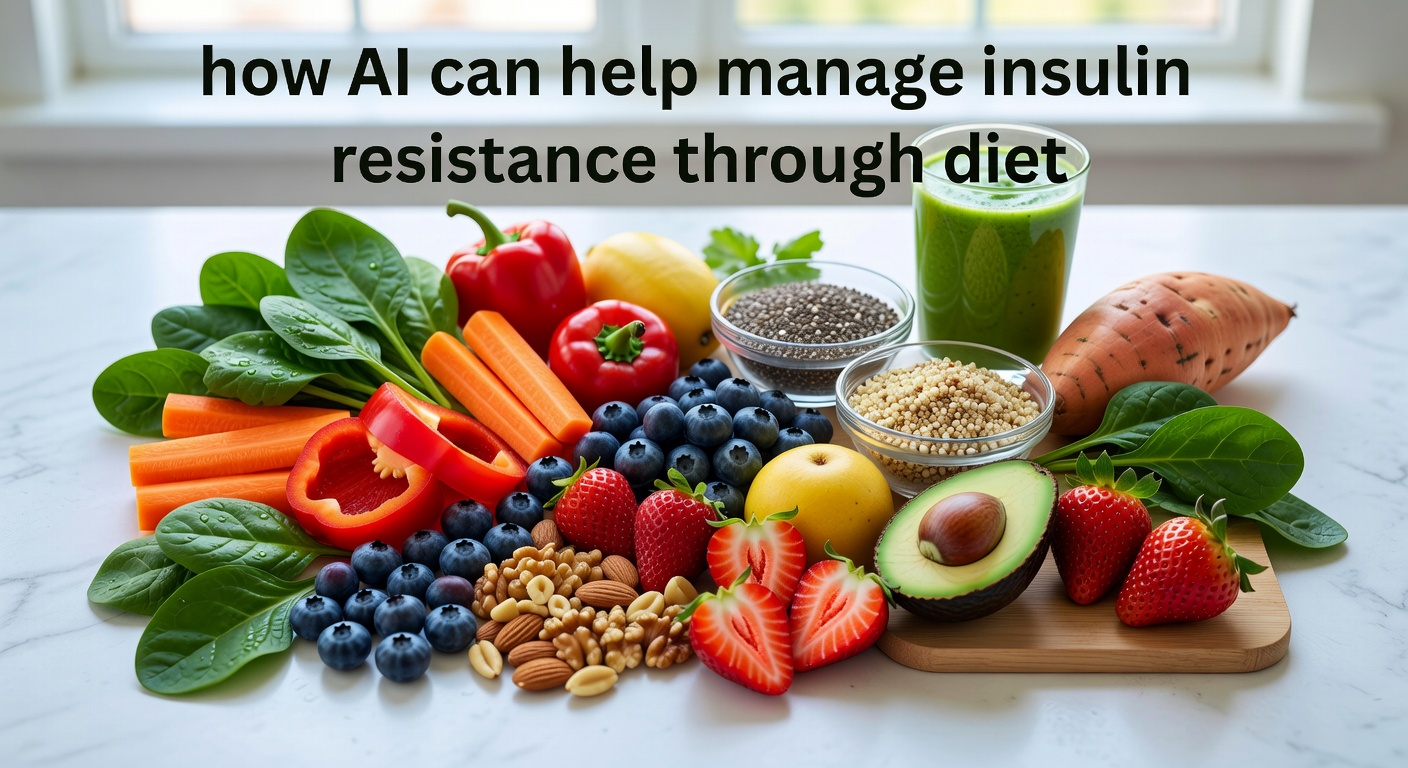
Managing insulin resistance through diet can be a challenging task, but recent advances in AI-powered nutrition education have made it easier to achieve. With the help of AI, individuals can now access personalized dietary recommendations and gain a deeper understanding of how their food choices impact their insulin sensitivity.
Table of Contents
- What is Insulin Resistance?
- Deeper Dive into the Mechanisms of Insulin Resistance
- How AI Can Help Manage Insulin Resistance Through Diet
- Advanced AI Applications in Dietary Management for Insulin Resistance
- Key Principles for Managing Insulin Resistance Through Diet
- Practical Action Steps and Common Pitfalls
- Putting It into Practice: AI-Powered Nutrition Education
- Research Evidence and Future Directions
- Key Takeaways
- FAQ
- Conclusion
What is Insulin Resistance?
Insulin resistance is a condition in which the body’s cells become less responsive to insulin, a hormone produced by the pancreas that regulates blood sugar levels. When the body produces insulin, it signals cells to absorb glucose from the bloodstream. However, in individuals with insulin resistance, the cells become less responsive to insulin, leading to elevated blood sugar levels and an increased risk of developing type 2 diabetes.
According to the Centers for Disease Control and Prevention (CDC), insulin resistance affects approximately 25% of the adult population in the United States, with a higher prevalence in certain populations, such as older adults and individuals with a family history of type 2 diabetes. This widespread prevalence underscores the urgent need for effective management strategies, with dietary interventions being a cornerstone.
Causes and Risk Factors
The development of insulin resistance is multifactorial, stemming from a complex interplay of genetic predispositions and lifestyle choices. Understanding these contributing factors is crucial for both prevention and management.
- Genetic predisposition: A family history of type 2 diabetes significantly increases an individual’s risk, suggesting a genetic component that influences insulin sensitivity.
- Obesity or excess body fat: Particularly visceral fat (fat around organs), is a major driver of insulin resistance. Adipose tissue, especially when excessive, secretes inflammatory molecules that interfere with insulin signaling.
- Physical inactivity: Regular physical activity enhances insulin sensitivity by increasing glucose uptake in muscle cells independent of insulin and improving the efficiency of insulin receptors. A sedentary lifestyle diminishes these benefits.
- Unhealthy diet: Diets high in refined carbohydrates, added sugars, and unhealthy fats contribute to chronic inflammation and metabolic dysfunction, directly impairing insulin action.
- Stress: Chronic psychological stress elevates cortisol levels, a hormone known to increase blood glucose and reduce insulin sensitivity.
- Lack of sleep: Insufficient or poor-quality sleep disrupts hormonal balance, leading to increased cortisol and decreased insulin sensitivity.
- Certain medications: Some drugs, such as corticosteroids, can induce or worsen insulin resistance.
- Polycystic Ovary Syndrome (PCOS): This hormonal disorder is strongly linked to insulin resistance in women.
Deeper Dive into the Mechanisms of Insulin Resistance
To truly grasp how diet and AI can intervene, it’s essential to understand the intricate cellular and molecular mechanisms underlying insulin resistance. This condition is not merely a problem of high blood sugar but a systemic metabolic dysfunction.
Cellular and Molecular Pathways
At the most fundamental level, insulin resistance begins when target cells - primarily muscle, liver, and fat cells - fail to respond adequately to insulin’s signal. Insulin typically binds to specific receptors on the cell surface, initiating a cascade of intracellular signaling events. This cascade involves the phosphorylation of various proteins, most notably the insulin receptor substrate (IRS) proteins, which then activate other downstream molecules like PI3K and Akt. This pathway is critical for translocating glucose transporter 4 (GLUT4) proteins to the cell membrane in muscle and adipose tissue, allowing glucose to enter the cell.
In insulin resistance, one or more steps in this signaling pathway are impaired. This can be due to:
- Defective insulin receptors: Fewer receptors or receptors that don’t bind insulin effectively.
- Post-receptor defects: Impaired phosphorylation of IRS proteins, leading to a breakdown in the signaling cascade. This is often linked to chronic inflammation, oxidative stress, and accumulation of intracellular lipids.
- Reduced GLUT4 translocation: Even if insulin binds, the glucose transporters may not move to the cell surface efficiently, preventing glucose uptake.
Organ-Specific Manifestations
Insulin resistance manifests differently across key metabolic organs:
- Muscle: Skeletal muscle is responsible for approximately 70-80% of post-meal glucose uptake. In insulin resistance, muscles become inefficient at absorbing glucose, leading to higher blood sugar levels.
- Liver: The liver plays a dual role, storing glucose as glycogen and producing glucose through gluconeogenesis. In an insulin-resistant state, the liver fails to adequately suppress glucose production even when insulin levels are high, contributing significantly to elevated fasting blood sugar.
- Adipose Tissue: Fat cells become resistant to insulin’s anti-lipolytic effects, leading to increased release of free fatty acids into the bloodstream. These free fatty acids can further impair insulin signaling in muscle and liver, creating a vicious cycle (lipotoxicity). Adipose tissue also becomes a source of pro-inflammatory cytokines, exacerbating systemic inflammation.
The Role of Inflammation and Oxidative Stress
Chronic low-grade inflammation, often associated with obesity and an unhealthy diet, is a powerful contributor to insulin resistance. Inflammatory cytokines (e.g., TNF-α, IL-6) interfere with insulin signaling pathways, primarily by disrupting IRS phosphorylation. Similarly, oxidative stress, an imbalance between free radical production and antioxidant defenses, can damage cellular components, including insulin receptors and signaling proteins, further impairing insulin action.
Gut Microbiome Connection
Emerging research highlights the critical role of the gut microbiome. Dysbiosis, an imbalance in gut bacteria, can lead to increased gut permeability (“leaky gut”), allowing bacterial products like lipopolysaccharides (LPS) to enter the bloodstream. LPS triggers systemic inflammation, which is a known driver of insulin resistance. Certain microbial metabolites, such as short-chain fatty acids, can also influence host metabolism and insulin sensitivity, making the gut a promising target for dietary interventions.
Progression to Type 2 Diabetes
Initially, the pancreas compensates for insulin resistance by producing more insulin (hyperinsulinemia) to maintain normal blood glucose levels. However, over time, the pancreatic beta cells, responsible for insulin production, can become exhausted and fail, leading to insufficient insulin secretion. When this compensatory mechanism fails, blood glucose levels rise persistently, progressing from prediabetes to full-blown type 2 diabetes.
Diagnosis of Insulin Resistance
Diagnosing insulin resistance directly can be complex, as there isn’t one single definitive clinical test. However, several markers and methods are used:
- Fasting Insulin Test: Elevated fasting insulin levels suggest the body is producing excess insulin to maintain normal blood sugar, indicating resistance.
- HOMA-IR (Homeostatic Model Assessment of Insulin Resistance): A calculation derived from fasting glucose and fasting insulin levels, providing an estimate of insulin resistance.
- Oral Glucose Tolerance Test (OGTT): Measures blood glucose and sometimes insulin levels at intervals after consuming a glucose drink, revealing how the body processes sugar.
- HbA1c: While primarily a diagnostic for prediabetes and diabetes, a higher HbA1c can indirectly reflect prolonged periods of elevated blood glucose due to insulin resistance.
- Clinical Indicators: High blood pressure, abnormal cholesterol levels (high triglycerides, low HDL), and increased waist circumference are often present in individuals with insulin resistance, even before blood sugar levels become overtly high.
Understanding these mechanisms provides a robust framework for developing targeted dietary and lifestyle interventions, amplified by the precision of AI-powered nutrition tools.
How AI Can Help Manage Insulin Resistance Through Diet
AI-powered nutrition education platforms, such as AINUTRY, offer a range of tools and resources to help individuals manage insulin resistance through diet. These platforms use machine learning algorithms to analyze individual data, including dietary habits, lifestyle factors, and health goals, to provide personalized recommendations for improving insulin sensitivity.
By leveraging AI, individuals can access a wealth of information on how different foods impact insulin resistance, including the glycemic index, nutrient content, and potential interactions with medications. The power of AI lies in its ability to process vast amounts of data and identify patterns that might be invisible to human analysis, thereby offering truly bespoke guidance.
Benefits of AI-Powered Nutrition Education
The application of AI in nutrition for insulin resistance is transformative, offering benefits that extend far beyond traditional dietary advice.
- Personalized dietary recommendations: AI moves beyond one-size-fits-all diets. It considers individual metabolic profiles, food preferences, cultural background, activity levels, and health conditions to craft highly specific meal plans and food suggestions. This personalization significantly increases adherence and effectiveness.
- Real-time tracking and monitoring: Users can log food intake, physical activity, and even continuous glucose monitor (CGM) data. AI platforms analyze this data instantly, providing immediate feedback on how specific food choices impact blood sugar and insulin response, allowing for rapid adjustments.
- Access to evidence-based research and resources: AI platforms are built upon vast databases of scientific literature, ensuring that recommendations are grounded in the latest nutritional science regarding insulin resistance. They can distill complex research into actionable advice.
- Support for sustainable lifestyle changes: Beyond just diet, AI can integrate recommendations for exercise, stress management, and sleep hygiene. By identifying patterns and providing consistent, data-driven feedback, AI helps users build lasting healthy habits rather than temporary fixes.
- Identification of triggers and optimal foods: AI algorithms can learn an individual’s unique response to different foods. For example, two people might eat the same apple, but their blood sugar response could vary significantly. AI, especially when paired with CGM data, can pinpoint which specific foods or combinations cause spikes and which promote stable blood sugar.
- Proactive risk assessment: By continuously analyzing user data, AI can identify emerging patterns that might indicate worsening insulin resistance or other metabolic issues, prompting early intervention.
Advanced AI Applications in Dietary Management for Insulin Resistance
The potential of AI in managing insulin resistance through diet extends to sophisticated applications that leverage cutting-edge technology and data science. These advanced tools promise to elevate personalized nutrition to an unprecedented level.
Predictive Analytics for Glycemic Response
One of the most powerful applications of AI is its ability to predict an individual’s glycemic response to specific foods or meals before they are consumed. This goes beyond the general glycemic index (GI) which is an average response. AI models, particularly those using machine learning and deep learning, can be trained on vast datasets including:
- Individual’s historical food intake: What they ate and their subsequent blood sugar changes.
- Biometric data: Weight, height, age, activity levels.
- Continuous Glucose Monitor (CGM) data: Real-time glucose fluctuations.
- Physiological data: Heart rate, sleep patterns from wearables.
- Ingredient composition: Detailed macronutrient and micronutrient profiles of foods.
By analyzing these inputs, AI can forecast how a particular meal will affect an individual’s blood sugar, allowing them to make informed choices to prevent spikes. For instance, an AI might suggest pairing a high-GI food with a specific protein or fiber source to mitigate its impact, or recommend adjusting portion sizes based on anticipated activity levels.
Sensor Integration and Real-time Feedback
The integration of AI platforms with various sensors marks a significant leap forward:
- Continuous Glucose Monitors (CGMs): CGMs provide constant glucose readings, which, when fed into an AI system, offer an unparalleled view of an individual’s metabolic response. AI can then correlate specific food intakes with glucose curves, identifying precise triggers and optimal dietary patterns. This real-time feedback loop is crucial for behavioral modification.
- Wearable Devices: Smartwatches and fitness trackers collect data on activity levels, sleep quality, and heart rate variability. AI can integrate this data to provide a holistic picture. For example, an AI might suggest a specific meal composition on a day with low activity versus a day with high activity, optimizing glucose management.
- Smart Scales and Body Composition Analyzers: Tracking changes in weight, body fat, and muscle mass provides valuable long-term data for AI to assess the effectiveness of dietary interventions and make adjustments.
Omics Data Integration for Hyper-personalization
The next frontier in AI-powered nutrition involves integrating ‘omics’ data for truly hyper-personalized recommendations:
- Genomics: Analyzing an individual’s genetic predispositions can reveal insights into their metabolic pathways, nutrient absorption, and risk for certain conditions. AI can interpret genetic variants related to carbohydrate metabolism, fat storage, or vitamin deficiencies to fine-tune dietary advice.
- Microbiome Analysis: Stool samples can provide a snapshot of an individual’s gut microbiome composition. AI can correlate specific bacterial profiles with metabolic health markers and recommend prebiotic or probiotic-rich foods, or specific fiber types, to foster a healthier gut environment conducive to improved insulin sensitivity.
- Metabolomics: Analyzing the small molecule metabolites present in blood or urine can offer real-time insights into an individual’s metabolic state, reflecting current dietary intake and physiological responses. AI can use this data to identify unique metabolic signatures and tailor interventions accordingly.
By combining these vast and complex datasets, AI can create a dynamic, evolving dietary plan that adapts to an individual’s changing physiology and environment.
Behavioral Nudging and Virtual Coaching
Beyond data analysis, AI plays a crucial role in behavior change:
- Personalized Reminders and Prompts: AI can deliver timely nudges for meal consumption, hydration, or physical activity, tailored to an individual’s routine and preferences.
- Motivational Support: AI chatbots can provide empathetic and evidence-based virtual coaching, answering questions, offering encouragement, and helping users navigate challenges. This constant, non-judgmental support can be vital for adherence.
- Goal Setting and Progress Tracking: AI helps users set realistic goals and visually track their progress, reinforcing positive behaviors and providing a sense of accomplishment.
These advanced AI applications transform dietary management from a static set of rules into a dynamic, interactive, and highly personalized journey towards improved insulin sensitivity and overall metabolic health.
Key Principles for Managing Insulin Resistance Through Diet
While AI-powered nutrition education platforms can provide valuable insights and guidance, there are several key principles that individuals can follow to manage insulin resistance through diet. These foundational principles serve as the bedrock upon which AI builds its personalized recommendations, ensuring a scientifically sound approach.
These principles include:
Eating a Balanced Diet
A balanced diet for insulin resistance emphasizes nutrient density, stable blood sugar, and anti-inflammatory properties. It’s about quality over quantity and choosing foods that support metabolic health.
- Focus on whole, unprocessed foods: This is paramount. Whole foods retain their natural fiber, vitamins, and minerals, which are often stripped away in processed counterparts. They promote satiety, slow glucose absorption, and provide essential nutrients for metabolic function. Examples include fresh fruits, vegetables, whole grains, legumes, nuts, seeds, and lean proteins.
- Incorporate a variety of fruits, vegetables, and whole grains:
- Fruits and Vegetables: Rich in fiber, antioxidants, and phytochemicals. Berries, leafy greens, cruciferous vegetables (broccoli, cauliflower), and non-starchy vegetables are particularly beneficial. They contribute to gut health and reduce oxidative stress.
- Whole Grains: Unlike refined grains (white bread, pasta), whole grains (oats, quinoa, brown rice, barley, whole wheat) retain their bran and germ, providing more fiber and nutrients. This fiber slows sugar absorption, leading to a more gradual rise in blood glucose. Portion control is still important, even with whole grains.
- Choose lean protein sources: Protein helps stabilize blood sugar by slowing digestion and promoting satiety, reducing the likelihood of overeating and subsequent glucose spikes. Lean protein sources include poultry (skinless chicken/turkey), fish (especially fatty fish rich in omega-3s), legumes (beans, lentils), tofu, tempeh, and low-fat dairy.
- Healthy fats are essential: Contrary to past beliefs, healthy fats do not cause insulin resistance; in fact, they can be protective. They contribute to satiety, aid in the absorption of fat-soluble vitamins, and provide essential fatty acids.
- Monounsaturated fats (MUFAs): Found in olive oil, avocados, and nuts (almonds, pecans).
- Polyunsaturated fats (PUFAs): Including omega-3 fatty acids from fatty fish (salmon, mackerel, sardines), flaxseeds, chia seeds, and walnuts. Omega-3s are particularly important for reducing inflammation.
- Limit saturated fats (found in red meat, high-fat dairy, processed foods) and completely avoid trans fats (often in processed snacks, fried foods), as these can worsen insulin sensitivity and promote inflammation.
Strategic Carbohydrate Management
While not necessarily a low-carb diet, managing carbohydrates intelligently is key:
- Prioritize complex carbohydrates: Focus on fiber-rich sources like vegetables, legumes, and whole grains. These are digested slowly, preventing rapid blood sugar spikes.
- Glycemic Index (GI) and Glycemic Load (GL): Understand these concepts. Foods with a low GI (e.g., most vegetables, legumes, whole oats) cause a slower, lower rise in blood glucose compared to high-GI foods (e.g., white bread, sugary drinks). GL also considers portion size. AI platforms can help track and recommend foods based on these metrics.
- Portion Control: Even healthy carbohydrates can elevate blood sugar if consumed in large quantities. AI tools can help individuals learn appropriate portion sizes.
Meal Timing and Frequency
Beyond what you eat, when you eat can also impact insulin sensitivity:
- Regular Meal Patterns: Eating at consistent times can help regulate the body’s circadian rhythms and improve metabolic function.
- Avoid Skipping Meals: Skipping meals, especially breakfast, can lead to overeating later and larger blood sugar fluctuations.
- Consider Intermittent Fasting: For some individuals, time-restricted eating (e.g., eating within an 8-10 hour window) can improve insulin sensitivity, but this should be approached cautiously and ideally with professional guidance, especially for those with existing health conditions. AI can help determine if this strategy is appropriate and how to implement it safely.
- Evening Meals: Consuming large, carbohydrate-heavy meals late in the evening can be detrimental to blood sugar control overnight. Lighter, protein-rich dinners are often recommended.
Hydration
Water is often overlooked but crucial for metabolic health:
- Drink plenty of water: Adequate hydration supports all bodily functions, including metabolism. Dehydration can lead to higher blood glucose concentrations.
- Avoid sugary drinks: Sodas, fruit juices (even 100% juice in large quantities), and sweetened teas are concentrated sources of
Frequently Asked Questions
How does AI personalize diet plans for managing insulin resistance?
AI analyzes individual data such as glucose levels, dietary habits, activity, and genetics to create highly personalized meal plans. It identifies optimal food choices and macronutrient ratios to stabilize blood sugar and improve insulin sensitivity over time.
Is using AI for diet management safe and effective for everyone with insulin resistance?
AI-driven dietary guidance is generally safe and effective for most individuals with insulin resistance, offering tailored strategies. However, it’s crucial to consult with a healthcare professional before starting any new diet plan, especially for those with co-existing medical conditions or on specific medications.
What specific dietary changes does AI typically recommend to improve insulin sensitivity?
AI often suggests reducing refined carbohydrates and added sugars, increasing fiber intake from whole grains, fruits, and vegetables, and incorporating healthy fats and lean proteins. It aims to optimize nutrient timing and food combinations to minimize blood sugar spikes and promote stable energy levels.
What are the alternatives to AI-guided diet for managing insulin resistance?
Traditional approaches include working with registered dietitians or nutritionists for personalized meal plans and lifestyle coaching. Self-management through evidence-based dietary guidelines like low-carb, Mediterranean, or DASH diets, coupled with regular exercise, also remains effective.
Leave a Reply