
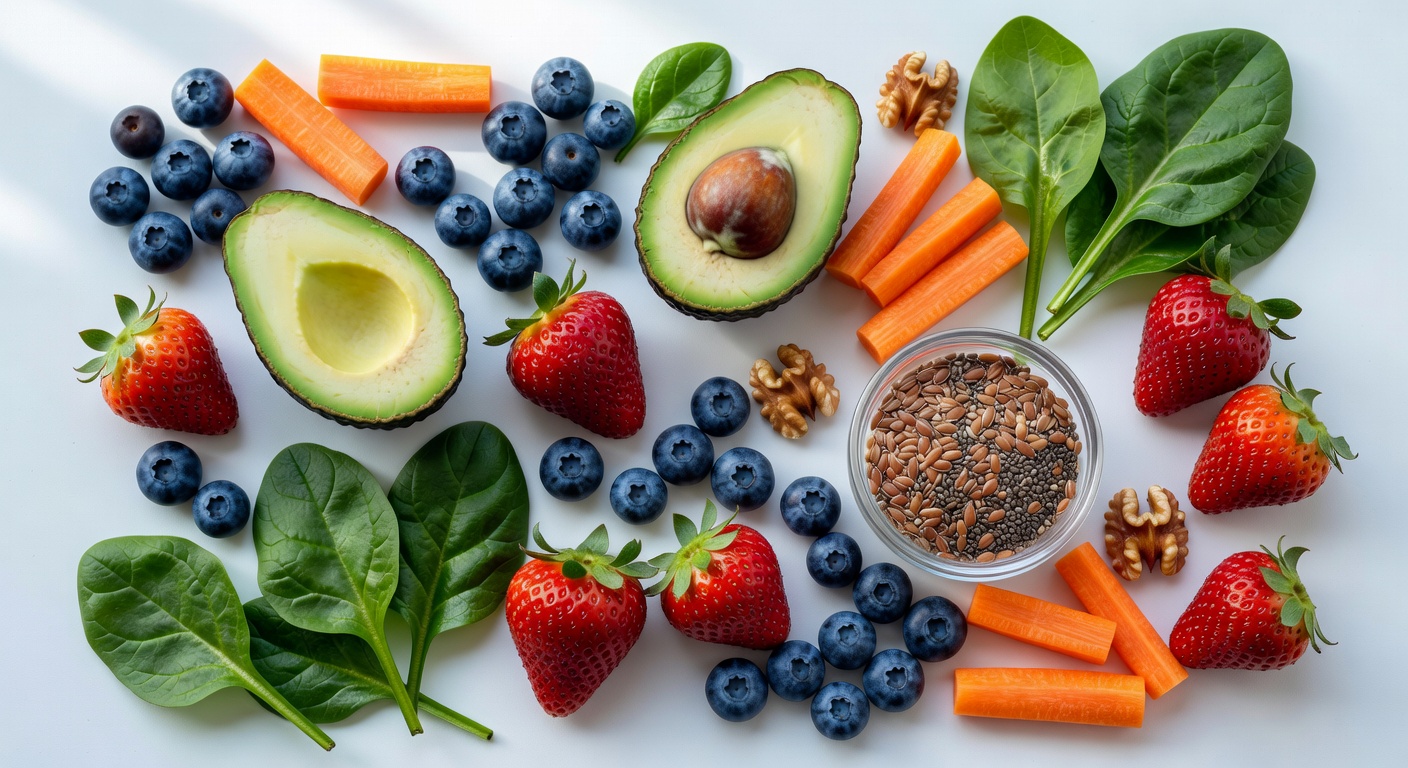
Here’s a startling fact: your brain, a mere 2% of your body weight, demands roughly 20% of your total caloric intake and oxygen supply daily. It’s an energy hog, a supercomputer running 24/7, yet many of us treat its fuel source with less thought than we give our car’s gas tank. We’re bombarded with promises - a pill here, a game there - that claim to unlock peak cognitive function, often overlooking the profound, foundational impact of what we actually eat. The truth is, much of what we believe about feeding our brains is simply wrong.
Table of Contents
- Do ‘Brain Games’ Really Boost Your Brainpower?
- Can a Handful of Supplements Outsmart a Poor Diet?
- Is Memory Loss Just an ‘Old Age’ Problem You Can’t Fight?
- Is There One ‘Brain Food’ to Rule Them All?
- What Actually Matters Here
- Questions People Actually Ask
- The Bottom Line
Do ‘Brain Games’ Really Boost Your Brainpower?
You’ve seen the ads. Shiny apps, intricate puzzles, promising to sharpen your focus, boost your memory, and even ward off cognitive decline. It’s a compelling fantasy: just a few minutes a day, and you’re building a smarter, more resilient brain. This myth took hold because it feels intuitive, like lifting weights for your muscles. If you practice, you get better, right? And yes, you do get better at the specific task you’re practicing. But here’s the rub: that improvement rarely transfers to other cognitive domains or, crucially, to real-world tasks.
The allure of a quick cognitive upgrade is strong, especially in a world demanding constant mental agility. We want an easy button for brain health. The problem isn’t that brain games are inherently bad; it’s that their marketing often overstates their broad impact. Imagine training intensely for a thumb wrestling competition. You’d become a phenomenal thumb wrestler, no doubt. But would that make you a better chess player, a more articulate conversationalist, or a sharper decision-maker in your career? Probably not directly. Your thumb might be ripped, but your overall cognitive fitness remains largely unchanged.
What the rigorous science tells us is far more nuanced. A 2017 meta-analysis published in Psychological Science in the Public Interest by Sala et al. reviewed over a hundred studies and concluded that while brain training can improve performance on trained tasks, there’s little evidence of transfer to untrained tasks, or to general cognitive abilities like fluid intelligence or everyday functioning. They found that the benefits were largely limited to “near transfer” - meaning improvements were seen only on tasks highly similar to the ones practiced. This doesn’t mean the brain isn’t plastic; it absolutely is. It just means that specific, highly repetitive tasks don’t typically create broad cognitive dividends.
So, if brain games aren’t the magic bullet, what builds genuine cognitive resilience? It’s about building cognitive reserve, which is your brain’s ability to cope with damage or disease without showing symptoms. This isn’t built by isolated exercises but by a rich, varied, and challenging life. Think learning a new language, mastering a complex musical instrument, engaging in vibrant social interactions, or consistently tackling novel problems. These activities demand a broader range of neural networks, fostering more robust connections and greater adaptability. For true brain health, you need to challenge your brain in diverse and meaningful ways, not just in isolated digital drills. Discover how diverse activities contribute to a resilient mind.
Can a Handful of Supplements Outsmart a Poor Diet?
Walk into any health food store or browse online, and you’ll be met with a dazzling array of supplements promising to boost brain health. Omega-3s, B vitamins, ginkgo biloba, bacopa monnieri, curcumin, lion’s mane - the list goes on. The underlying myth here is that you can outsource your nutrition, that a few capsules can compensate for a diet lacking in whole, nutrient-dense foods. It’s an attractive idea, a shortcut for modern living where time is scarce and convenience king. And for certain, very specific deficiencies, supplements can be incredibly valuable. But they are not a substitute for the complex symphony of nutrients found in real food.
The problem with relying solely on supplements is that food isn’t just a collection of isolated compounds. It’s a complex matrix where nutrients interact, synergize, and often enhance each other’s absorption and bioavailability. Think of it like this: a supplement is a single instrument playing a solo. It might be beautiful, even technically brilliant. But a whole food diet is an entire orchestra, with brass, strings, percussion, and woodwinds playing together in a rich, harmonious composition. Trying to recreate that symphony with a few isolated instruments just doesn’t work. You miss the subtle interplay, the broad spectrum of phytonutrients, fiber, and micronutrients that contribute to overall health and, critically, brain health.
For example, take omega-3 fatty acids, particularly DHA, which is a major structural component of the brain and crucial for neuron function. While fish oil supplements can provide these, a 2012 randomized controlled trial by Chew et al. in JAMA Internal Medicine (3502 adults, 6.2 years) found no significant difference in cognitive decline between participants taking omega-3 supplements and those taking a placebo. This isn’t to say omega-3s aren’t important; they absolutely are. But the context matters. For individuals with existing deficiencies or specific genetic predispositions, targeted supplementation might be beneficial, and this is where AI nutrition steps in. An AI platform, fed with your individual dietary intake, blood work, and even genetic data, can pinpoint genuine nutritional gaps that might warrant specific supplementation, rather than a scattershot approach.
The real power lies in leveraging AI to analyze your unique metabolic profile and dietary habits, identifying precise deficiencies or suboptimal nutrient levels that a generic multivitamin simply won’t address. For most people, a diet rich in fatty fish, nuts, seeds, leafy greens, and colorful fruits will provide a superior foundation for brain health than any pill ever could. Supplements, when truly indicated, should act as precision tools to fill specific, identified gaps, not as crutches for a consistently poor diet. They’re the scalpel, not the sledgehammer, in your brain health toolkit. This nuanced approach moves us forward from generalized advice to truly personalized nutritional strategies.
Is Memory Loss Just an ‘Old Age’ Problem You Can’t Fight?
There’s a pervasive and disheartening myth that significant memory loss is an inevitable part of aging, something to simply accept as your golden years approach. It’s a narrative that contributes to a sense of helplessness, suggesting that once you hit a certain age, your cognitive fate is sealed. This misconception often takes root from observing older relatives or public figures struggling with cognitive decline, leading to a fatalistic acceptance of what is, in many cases, a preventable or at least manageable condition. We shrug and say, “That’s just how it goes.”
The truth, however, is far more empowering. While some degree of cognitive slowing can be a natural part of aging, severe memory loss and debilitating cognitive decline are not. Our brains are remarkably plastic, meaning they can adapt, reorganize, and even generate new neurons throughout life, a process known as neurogenesis, particularly in the hippocampus, a key area for memory formation. Lifestyle choices exert a profound influence over this process, acting as potent levers for maintaining and even enhancing brain health well into old age.
Consider the impact of physical activity. A 2014 systematic review by Erickson et al. in the Journal of Sport and Health Science (analyzing 11 studies) demonstrated that regular aerobic exercise significantly increases hippocampal volume and improves memory function in older adults. It’s not just about keeping your heart healthy; it’s about directly fueling your brain’s capacity for growth and repair. Alongside exercise, adequate sleep and a robust social life are critical, often overlooked pillars. Poor sleep, for instance, impairs the brain’s ability to clear metabolic waste products that accumulate during wakefulness, potentially contributing to neurodegenerative processes.
This is where personalized AI nutrition becomes a game-changer. By analyzing your sleep patterns, activity levels, stress markers, and even genetic predispositions, AI can offer bespoke recommendations far beyond generic advice. It can identify patterns, for example, linking suboptimal magnesium intake to restless sleep, which then negatively impacts memory consolidation. It can suggest personalized dietary tweaks to support neurotransmitter production crucial for mood and cognitive function. This isn’t about magical cures, but about optimizing your individual physiological landscape to maximize your brain’s natural resilience. You have far more agency over your cognitive future than you might realize, and AI can help you wield that power with precision.
The Power of Community and Purpose
Beyond the biochemical, the psychosocial aspects of brain health are equally critical. Humans are fundamentally social creatures, and isolation is a known risk factor for cognitive decline. Engaging in meaningful social interactions, pursuing hobbies, and having a sense of purpose all contribute to cognitive stimulation and emotional well-being, which in turn support brain function. Imagine your brain as a vibrant garden: it needs good soil (nutrition), regular watering (hydration), sunlight (sleep), and active pruning and new plantings (learning, social engagement) to truly flourish. Neglect any one of these, and the garden struggles.
- Exercise Regularly: Aim for at least 150 minutes of moderate-intensity aerobic activity per week, plus strength training.
- Prioritize Sleep: Target 7-9 hours of quality sleep nightly. Sleep is when your brain cleanses and consolidates memories.
- Stay Socially Engaged: Connect with friends, family, and community groups. Meaningful interactions keep your brain active.
- Learn New Things: Pick up a new skill, language, or instrument. Novelty strengthens neural pathways.
- Manage Stress: Chronic stress elevates cortisol, which can damage brain cells over time. Explore mindfulness or meditation.
Embracing these multi-faceted lifestyle interventions, tailored through smart AI insights, is the real path to combating age-related cognitive decline, showing that your brain’s destiny isn’t just about genetics, but about daily choices.
Is There One ‘Brain Food’ to Rule Them All?
The media loves a “superfood.” One week it’s blueberries, the next turmeric, then kale, then salmon, each hailed as the singular key to unlocking peak brain health. This myth, that there’s one magical ingredient that can single-handedly transform your cognitive function, is seductive because it offers simplicity in a complex world. We want an easy answer, a silver bullet we can add to our shopping cart. But just like with supplements, the reality of nutrition, particularly for the brain, is far more intricate and collaborative.
The problem with the “superfood” mentality is that it often leads to an overemphasis on one or two items while neglecting the broader dietary pattern. You can eat all the blueberries in the world, but if the rest of your diet is processed junk food, high in refined sugars and unhealthy fats, those blueberries won’t be able to counteract the systemic damage. Your brain doesn’t thrive on isolated nutrients; it thrives on a symphony of them, working together in concert to reduce inflammation, protect cells, and support neurotransmitter function. This collaborative effort is what truly moves the needle for sustained brain health.
What the science consistently points to are comprehensive dietary patterns, not individual foods. Take the Mediterranean diet, for example, or its brain-specific cousin, the MIND diet (Mediterranean-DASH Intervention for Neurodegenerative Delay). These diets emphasize whole, unprocessed foods: abundant vegetables, fruits, whole grains, legumes, nuts, seeds, and healthy fats like olive oil, with moderate amounts of fish and poultry. A 2015 prospective cohort study by Morris et al. in Alzheimer’s & Dementia (960 older adults, 4.5 years) found that adherence to the MIND diet was associated with slower rates of cognitive decline, equivalent to being 7.5 years younger cognitively. It wasn’t one food doing the heavy lifting; it was the synergy of the entire pattern.
This is precisely where AI nutrition provides an unparalleled advantage. Instead of chasing the latest superfood fad, an AI-powered platform can analyze your entire dietary intake, cross-referencing it with your personal health data, and even your microbiome profile (via stool sample analysis, for instance). It can then identify specific nutrient gaps or excesses within your overall pattern and recommend adjustments that align with proven dietary frameworks like the MIND diet, but personalized to your preferences and biochemical needs. It’s about understanding your unique nutritional fingerprint and optimizing it, not just adding a new ingredient to a potentially flawed foundation. Explore how personalized nutrition plans are changing the game.
For example, if your AI analysis reveals a slight iron deficiency, it won’t just tell you to eat more spinach; it might suggest pairing it with vitamin C-rich foods to enhance absorption, or recommend specific cooking methods to maximize nutrient retention. It moves beyond generic “eat healthy” advice to a truly actionable, data-driven strategy for your brain. This comprehensive, personalized approach is far more effective than hoping a single “superfood” will be your brain’s savior. It’s about building a consistently supportive dietary environment, every single day.
What Actually Matters Here
- Brain “games” typically only improve specific task performance, not broad cognitive ability. True cognitive resilience comes from diverse intellectual challenges and rich life experiences.
- Supplements are tools for specific, identified deficiencies, not replacements for a balanced, whole-food diet. Your brain needs the complex synergy of real food.
- Significant memory loss is not an inevitable consequence of aging; lifestyle interventions like exercise, sleep, social engagement, and diet profoundly impact cognitive health.
- There’s no single “superfood” for brain health. Focus on comprehensive dietary patterns like the MIND or Mediterranean diet for synergistic benefits.
- AI Nutrition is the future of personalized brain health, moving beyond generic advice to pinpoint individual needs and create tailored, data-driven strategies for optimal cognitive function.
- Your brain is constantly adapting; you have immense power to influence its health through consistent, informed lifestyle choices.
Questions People Actually Ask
Does caffeine help brain health in the long run?
Caffeine’s short-term benefits for alertness and focus are well-documented. For long-term brain health, the evidence is more nuanced. Some observational studies suggest a potential protective effect against cognitive decline and Parkinson’s disease, possibly due to its antioxidant properties and modulation of neurotransmitters. However, the optimal dose varies widely, and excessive intake can disrupt sleep, which is detrimental to brain health. It’s best consumed in moderation, and not as a substitute for adequate rest or a healthy diet.
Can stress really damage my brain?
Absolutely. Chronic stress, characterized by prolonged elevated cortisol levels, can have significant negative impacts on brain health. Cortisol can shrink the hippocampus, a brain region critical for memory and learning, and impair neurogenesis. It also contributes to inflammation, which is a known factor in neurodegenerative diseases. Managing stress through techniques like mindfulness, meditation, exercise, and strong social connections isn’t just about feeling better; it’s a vital strategy for protecting your brain’s long-term function.
Is gluten bad for everyone’s brain?
No, gluten is not inherently bad for everyone’s brain. For individuals with celiac disease, gluten causes an autoimmune reaction that can lead to neurological symptoms. For those with non-celiac gluten sensitivity, some cognitive “fog” or other issues may arise. However, for the vast majority of people without these conditions, gluten consumption from whole grains is not detrimental and can even be part of a healthy diet. Removing gluten unnecessarily can sometimes lead to nutrient deficiencies if not carefully managed.
How does gut health relate to brain health?
The “gut-brain axis” is a fascinating and rapidly evolving area of research. Your gut microbiome, the trillions of bacteria living in your intestines, produces neurotransmitters, short-chain fatty acids, and other compounds that directly influence brain function, mood, and even behavior. An imbalance in gut bacteria (dysbiosis) can contribute to inflammation, oxidative stress, and impaired communication along this axis, potentially impacting cognitive health and increasing the risk of neurodegenerative conditions. Feeding your gut a diverse array of fiber-rich plant foods is key.
If I have a family history of Alzheimer’s, is there anything I can do?
Yes, absolutely. While genetics play a role, they are not destiny. Lifestyle factors account for a significant portion of Alzheimer’s risk. Even with a strong family history, adopting a brain-healthy lifestyle - including a MIND or Mediterranean-style diet, regular physical activity, adequate sleep, social engagement, and cognitive stimulation - can significantly reduce your risk and potentially delay onset. AI nutrition tools can help you identify specific, personalized strategies to mitigate genetic predispositions, giving you proactive control over your brain’s future.
The Bottom Line
Navigating the landscape of brain health advice can feel like trying to find true north in a blizzard of conflicting information. We’ve seen how tempting it is to fall for quick fixes, isolated “superfoods,” or the fatalistic belief that cognitive decline is unavoidable. But the truth, revealed by rigorous science and a nuanced understanding of human biology, offers a much more empowering narrative: your brain is remarkably resilient, capable of adaptation and growth throughout your life, and profoundly influenced by your daily choices.
The real power to optimize brain health doesn’t lie in a single pill or a specific game, but in a holistic, interconnected approach that respects your body’s intricate systems. It’s about feeding your brain with a diverse symphony of nutrients, challenging it with novel experiences, protecting it with restorative sleep, and nurturing it through meaningful social connections. As we move forward, the most exciting frontier is how AI nutrition can cut through the noise, translating complex science into actionable, personalized strategies tailored precisely to your unique biology.
Imagine a future where your dietary choices for brain health are guided not by fads or generic guidelines, but by your own real-time biometric data, genetic predispositions, and lifestyle patterns. This isn’t science fiction; it’s the imminent reality of AI nutrition. It’s about empowering you to be the most informed, precise steward of your own cognitive destiny, ensuring your brain remains sharp, vibrant, and engaged for decades to come. The journey to optimal brain health is deeply personal, and the tools to chart that course are now more sophisticated than ever before.
{EMAIL_CTA}
{DISCLAIMER}
Leave a Reply