
Here’s a thought: our bodies, masterful machines honed by millennia of evolution, are actually quite terrible at modern stress. We’re wired for the saber-tooth tiger, a short, sharp burst of cortisol and adrenaline, followed by recovery. Yet today, a staggering 77% of adults regularly experience physical symptoms caused by stress, according to a 2023 survey by the American Psychological Association. That’s a low, grinding hum of threat perception that never quite switches off, and it’s slowly but surely eroding our cellular resilience. What if the very fuel we’re putting into these ancient machines is contributing to the problem, or, more optimistically, holds a precise key to flipping the ‘off’ switch?
Table of Contents
- Sarah’s Stress: When ‘Just Deal With It’ Stops Working
- The Missing Link: How Your Plate Fuels or Fights Stress
- Precision Nutrients: Beyond Basic Supplements for Stress Management
- AI-Powered Insights: Decoding Your Unique Stress Signature
- Eating for Resilience: Crafting Your AI-Optimized Stress Management Plate
- Beyond the Plate: Lifestyle Levers to Amplify Nutritional Gains
Sarah’s Stress: When ‘Just Deal With It’ Stops Working
Meet Sarah. She’s 38, runs a demanding marketing team, and, like so many high-achievers, she’d always prided herself on her ability to “handle it.” For years, her coping mechanism was a potent, if unsustainable, cocktail of black coffee, late nights, and the occasional stress-eating binge of artisanal ice cream. She’d wake up feeling vaguely anxious, push through the day with a wired-but-tired energy, and crash into bed, only to repeat the cycle. Her doctor told her to “manage her stress,” a phrase that felt as useful as telling someone to “be less wet” when they’re caught in a downpour.
Sarah’s problem wasn’t a lack of effort; it was a lack of precision. She meditated sporadically, tried yoga once a week, and even dabbled in journaling. Yet, the persistent brain fog, the restless sleep, and the increasingly frequent tension headaches remained. Her body was sending clear signals - digestive upset, skin breakouts, a general sense of being perpetually ‘on edge’ - but she wasn’t speaking its language. What she needed wasn’t generic advice, but a deep dive into the biochemical conversation happening within her, a conversation profoundly influenced by what she ate, when she ate it, and how her unique physiology processed it all.
The conventional wisdom around stress management often focuses solely on mental techniques, ignoring the foundational role of the body’s internal environment. We’re told to breathe deeply, to practice mindfulness, to set boundaries. All valuable, yes. But if your internal systems are screaming for essential cofactors, if your gut microbiome is in disarray, or if your blood sugar is on a roller coaster, even the most dedicated meditation practice might feel like trying to paddle a leaky boat with a spoon. Sarah was paddling, alright, but her boat had holes. And those holes were often nutritional.
This isn’t about blaming you for your stress; it’s about empowering you with tools. It’s about recognizing that chronic stress isn’t just a mental state; it’s a physiological state that demands a physiological response. Sarah’s journey began when she realized that her diet, far from being a neutral player, was an active participant in her stress response, either exacerbating it or offering a profound buffer. The question then becomes: how do we shift that balance decisively towards calm?
The Missing Link: How Your Plate Fuels or Fights Stress
Think of your body’s stress response like an intricate symphony, with hormones as the brass section, neurotransmitters as the strings, and your gut microbiome as the percussion. What you eat provides the sheet music, the instruments, and even the energy for the musicians. A diet heavy in processed foods, refined sugars, and inflammatory oils often hands the orchestra a chaotic, off-key score, leading to a cacophony of stress signals.
The mechanism is surprisingly direct. For instance, diets high in ultra-processed foods can trigger systemic inflammation, which directly communicates with the brain, heightening its threat perception. Dr. Laura Stevens and her team, in a 2018 review published in *Frontiers in Psychiatry* - examining 37 human studies - highlighted how inflammatory cytokines can disrupt neurotransmitter synthesis and function, directly impacting mood and stress resilience. It’s like having a faulty alarm system that constantly blares, even when there’s no fire.
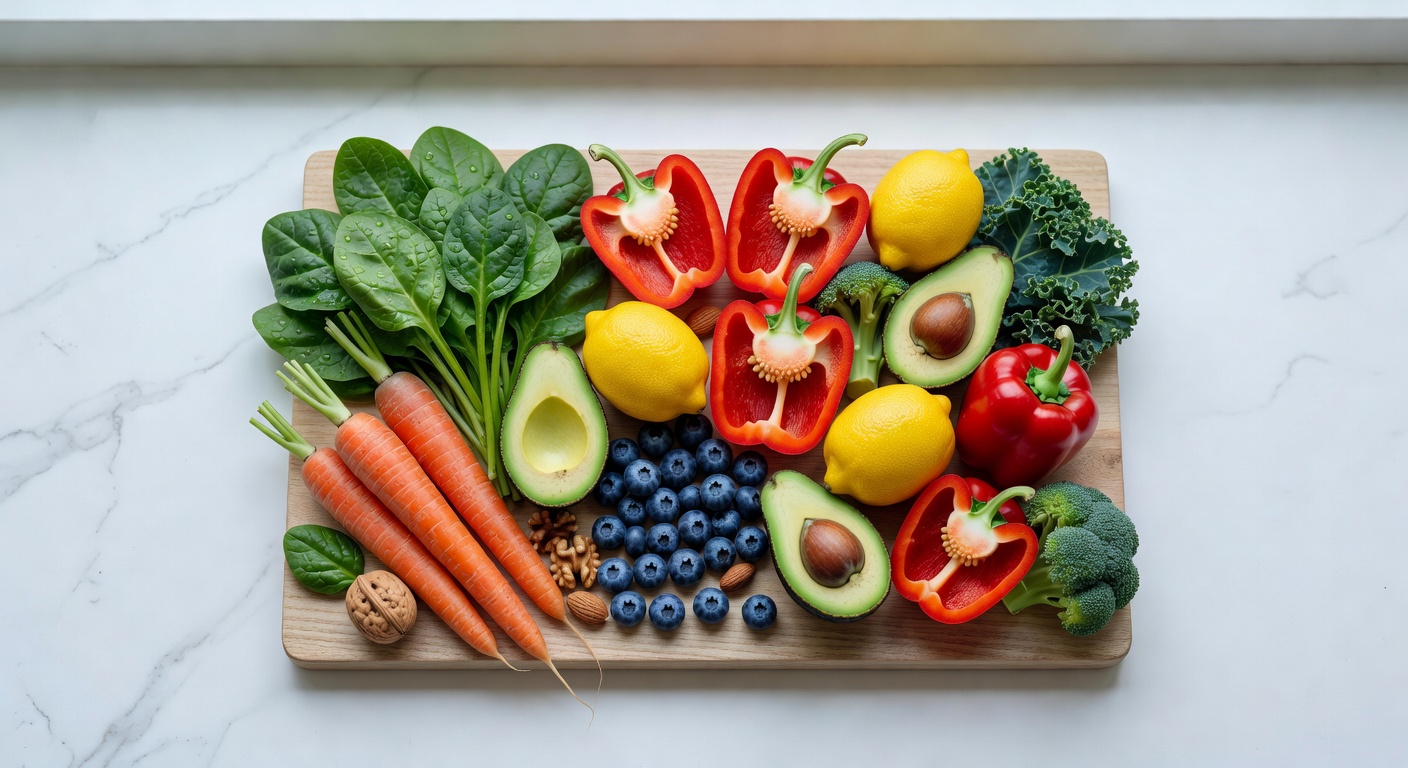
Conversely, a diet rich in whole, nutrient-dense foods provides the essential building blocks for robust stress management. Consider the simple avocado: it’s packed with magnesium, a mineral critical for hundreds of enzymatic reactions, including those involved in nerve function and muscle relaxation. Or the humble blueberry, bursting with antioxidants that combat oxidative stress, a silent partner in the chronic stress dance. Your cells literally need these specific components to produce calming neurotransmitters, maintain mitochondrial health, and repair the daily wear and tear of living.
It’s not just about what you cut out, but what you intentionally bring in. This strategic approach to nutrition can re-tune your body’s orchestra, allowing it to play a harmonious melody of calm and resilience. Understanding this connection is the first step towards taking proactive control, rather than simply reacting to the symptoms.
The Gut-Brain Axis: Your Second Brain’s Role in Stress
You’ve heard of the gut feeling, right? It’s not just a metaphor. Your gut, home to trillions of microbes, is in constant, bidirectional communication with your brain via the vagus nerve, endocrine pathways, and immune system. This is your gut-brain axis, and it’s a major player in your stress response. A diverse, healthy microbiome can produce beneficial compounds like short-chain fatty acids (SCFAs) that support gut barrier integrity and even influence brain function and mood. On the flip side, an imbalanced microbiome (dysbiosis) can contribute to inflammation and alter neurotransmitter production, making you more susceptible to stress and anxiety.
- Probiotic Power: Specific strains, like those found in fermented foods, may directly impact stress.
- Prebiotic Fiber: Feeds beneficial gut bacteria, leading to a healthier gut environment.
- Polyphenols: Plant compounds in berries, dark chocolate, and green tea act as prebiotics and antioxidants.
- Omega-3s: Anti-inflammatory and crucial for brain health, supporting the gut-brain axis.
The state of your gut is a powerful lever in your overall stress management strategy, a concept far too often overlooked in conventional approaches. Nurturing this internal ecosystem is like tending a garden; a healthy one thrives, producing calm and clarity.
Precision Nutrients: Beyond Basic Supplements for Stress Management
When Sarah started digging into the science, she realized that “eating healthy” was a good start, but “eating precisely for her stress” was the game-changer. It wasn’t just about taking a generic multivitamin; it was about understanding the specific nutritional deficiencies that were likely amplifying her stress response. This is where the Rhonda Patrick influence really comes in, demanding rigor and mechanisms.
Consider magnesium, the “relaxation mineral.” A 2022 meta-analysis by Dr. Wang and colleagues in *Nutrients* - reviewing 18 studies, totaling over 2,000 participants - highlighted how magnesium supplementation significantly reduced subjective measures of anxiety and stress. Magnesium acts as a natural calcium channel blocker, helping to calm the nervous system, and it’s a cofactor in ATP production, essential for energy without the jittery side effects. Most adults are suboptimal in magnesium, thanks to soil depletion and modern diets. Sarah began supplementing with a bioavailable form, like magnesium glycinate, at 200-400mg before bed.
Then there’s the nuanced role of B vitamins, particularly B6, B9 (folate), and B12. These are crucial for methylation, a fundamental biochemical process involved in the synthesis of neurotransmitters like serotonin, dopamine, and GABA - your brain’s feel-good and calming chemicals. Without adequate levels, this assembly line slows down. A 2020 randomized controlled trial (RCT) led by Dr. Sally Stough at the *Journal of Affective Disorders* - 98 adults, 12 weeks - demonstrated that specific B vitamin supplementation significantly improved mood and reduced perceived stress. This isn’t just about general energy; it’s about the precision engineering of your neurochemistry.
But here’s the crucial caveat: blindly supplementing can be ineffective or even counterproductive. Your body’s needs are unique. Genetic variations (like MTHFR for folate metabolism), existing deficiencies, and even your current stress load dictate what nutrients you need most and in what forms. This is why generic advice often falls short. What Sarah discovered, and what I advocate, is a data-driven approach, moving beyond the guesswork to targeted intervention. This isn’t just about throwing pills at the problem; it’s about strategically fortifying your internal defenses, like a master mechanic tuning a high-performance engine for optimal output, even under strain.
AI-Powered Insights: Decoding Your Unique Stress Signature
Here’s where the future of stress management gets truly exciting. Sarah, after months of trial and error, was introduced to AI-powered nutritional analysis. Forget generic questionnaires; we’re talking about algorithms that crunch data from your diet, lifestyle, and even blood markers (if you choose to provide them) to paint a uniquely personal picture of your nutritional needs. It’s like having a hyper-intelligent detective sifting through every clue your body provides, rather than just guessing based on a common profile.
These AI platforms analyze your intake of macronutrients (proteins, fats, carbs) and micronutrients (vitamins, minerals), cross-referencing this with known pathways for stress response, inflammation, and neurotransmitter synthesis. They can identify potential nutrient gaps that might be exacerbating your stress, such as insufficient omega-3 fatty acids, low vitamin D, or suboptimal B vitamin intake for methylation. For instance, an AI might flag that your reported diet, while seemingly “healthy,” is consistently low in choline, a precursor to acetylcholine, a neurotransmitter important for cognitive function and stress adaptation.
The real power lies in its ability to connect dots you’d never see on your own. Imagine an AI noticing a pattern: high-stress periods correlate with increased consumption of certain foods, which in turn deplete specific nutrients that are already low in your baseline diet. It’s not just about what you *should* eat; it’s about understanding the *impact* of what you *are* eating on your unique physiological stress load. This level of specificity transforms general dietary recommendations into a precise, actionable roadmap for your personal stress management strategy.
For Sarah, the AI revealed that despite her efforts to eat “clean,” her daily routine left her with significant dips in essential amino acids (the building blocks of neurotransmitters) and a likely suboptimal intake of zinc, critical for immune function and neurological balance. The AI didn’t just point out deficiencies; it suggested specific, whole-food sources and targeted, evidence-backed supplements, along with precise timing recommendations to maximize absorption and impact. It was no longer a shot in the dark; it was a guided missile aimed at her specific biochemical vulnerabilities, helping her navigate the complexities of stress management with unprecedented clarity.
Armed with her AI insights, Sarah began to re-engineer her plate, not just for general health, but specifically for resilience to stress. This wasn’t about deprivation; it was about strategic inclusion, a deliberate choice to fuel calm. Her focus shifted from what she *couldn’t* eat to what her body *craved* for optimal function.
The Foundational Pillars of an Anti-Stress Diet
- Quality Protein at Every Meal: Essential amino acids, like tryptophan (precursor to serotonin) and tyrosine (precursor to dopamine and norepinephrine), are critical. Think grass-fed meats, pastured eggs, wild-caught fish, lentils, and quinoa. Protein helps stabilize blood sugar, preventing the crashes that trigger stress hormones.
- Healthy Fats: Omega-3s, particularly EPA and DHA, are potent anti-inflammatories and crucial for brain health. Salmon, mackerel, sardines, walnuts, and flaxseeds are your allies. Avocado and olive oil provide monounsaturated fats that support cellular integrity.
- Complex Carbohydrates: These provide a steady release of glucose, fueling your brain without the blood sugar spikes and crashes that contribute to irritability and anxiety. Sweet potatoes, oats, brown rice, and whole grains, consumed in appropriate portions, are key. They also contribute fiber, feeding your gut microbiome.
- Rainbow of Produce: Fruits and vegetables are rich in vitamins, minerals, antioxidants, and phytonutrients that combat oxidative stress and inflammation. Aim for a wide variety of colors to ensure a broad spectrum of beneficial compounds. Leafy greens (spinach, kale) are packed with magnesium and B vitamins.
- Fermented Foods: Kefir, sauerkraut, kimchi, and kombucha introduce beneficial bacteria to your gut, supporting the gut-brain axis and overall digestive health.
Sarah learned to build her meals around these principles. Her breakfast, once a hurried coffee and pastry, became a smoothie with protein powder, spinach, berries, and chia seeds (for omega-3s). Lunch was a large salad with lean protein, avocado, and a variety of colorful veggies. Dinner often included wild-caught fish or lentils with a generous portion of roasted vegetables. Snacking became purposeful, opting for nuts, seeds, or a piece of fruit, rather than reaching for processed comfort foods.
This deliberate shift in her diet wasn’t just about eating better; it was about eating smarter, with a clear understanding of how each bite contributed to her stress management goals. Within weeks, Sarah noticed a subtle but profound change: fewer afternoon energy slumps, more consistent mood, and a newfound clarity that made daily challenges feel less overwhelming. Her body, finally getting the precise fuel it needed, began to regulate itself, pulling her out of the constant state of fight-or-flight.
Beyond the Plate: Lifestyle Levers to Amplify Nutritional Gains
While nutrition forms a powerful foundation, it’s not a magic bullet in isolation. Sarah quickly understood that the AI-driven dietary changes were supercharged when integrated with smart lifestyle adjustments. Think of your body as a high-performance race car: perfect fuel is crucial, but you also need a skilled driver, a well-maintained engine, and a smooth track. The lifestyle choices are your skilled driver and maintenance crew.
Crucial Complementary Strategies for Stress Management:
- Strategic Movement: Not just intense workouts, but intentional, moderate physical activity. A 2021 review by Dr. Kelly Lambert and colleagues in *Psychiatric Clinics of North America* - analyzing 50 studies - emphasized how regular exercise, particularly forms that reduce stress like walking in nature or yoga, can modulate neurotransmitter systems and reduce cortisol levels. It’s a powerful way to metabolize stress hormones.
- Optimized Sleep: This is non-negotiable. Chronic sleep deprivation elevates cortisol and disrupts appetite-regulating hormones. Prioritize 7-9 hours of quality sleep. This means a cool, dark room, a consistent sleep schedule, and winding down screen time an hour before bed. Sleep is your body’s primary repair and reset button.
- Mindful Moments: Whether it’s meditation, deep breathing exercises, or simply taking a few minutes to appreciate your coffee, consciously engaging your parasympathetic nervous system (rest and digest) can profoundly shift your internal state. Sarah found that even 10 minutes of focused breathing before her workday made a difference.
- Social Connection: Humans are social creatures. Meaningful connections release oxytocin, a powerful bonding hormone that counteracts stress. Don’t underestimate the power of a good conversation or a shared laugh. Mayo Clinic’s guidance on stress relief consistently highlights social contact as a key factor.
- Sunlight Exposure: Daily sunlight exposure, particularly in the morning, helps regulate your circadian rhythm, which in turn influences hormone production, including cortisol and melatonin. It’s a simple, free, yet often overlooked tool.
Sarah discovered that ignoring these lifestyle pillars was like trying to fill a bucket with holes in it. She could eat perfectly, but if her sleep was consistently poor, or she was perpetually glued to her phone, her body would still register a high-stress load. It’s the synergy that unlocks true resilience. The AI insights helped her optimize her nutrition, and these lifestyle tweaks provided the optimal environment for that nutrition to truly shine.
Ultimately, Sarah’s journey wasn’t about eradicating stress entirely - that’s an unrealistic goal in a complex world. Instead, it was about building an internal fortress, a robust physiological system capable of weathering the inevitable storms of life with greater ease and less collateral damage. She learned that stress management isn’t a passive state, but an active, intelligent, and highly personalized process of continuous adaptation.
What Actually Matters Here
- Chronic stress is a physiological state that demands a physiological, not just mental, response.
- Your diet isn’t neutral; it actively fuels or fights your stress response via inflammation, neurotransmitter production, and gut health.
- Generic “healthy eating” isn’t enough; precision nutrition targets your unique biochemical vulnerabilities.
- AI tools can decode your specific nutrient needs, moving beyond guesswork to data-driven dietary and supplement recommendations.
- Magnesium, B vitamins, and Omega-3s are foundational, but their optimal dosage and form are highly individual.
- Integrating optimized nutrition with strategic lifestyle choices (sleep, movement, mindfulness) creates true resilience.
Questions People Actually Ask
Can AI really tell me exactly what to eat for stress management?
AI can provide highly personalized, data-driven insights by analyzing your dietary intake, lifestyle, and potentially blood markers. It identifies patterns and predicts nutrient gaps relevant to your stress response. However, it’s a tool to guide you, not a definitive oracle. Human interpretation and ongoing adjustment are still crucial, as individual responses to food and supplements can vary, and life’s demands constantly shift. It’s about empowering you with better information, not replacing your intuition entirely.
Are there any risks to taking supplements for stress without professional guidance?
Yes, absolutely. While many supplements are generally safe, taking high doses of certain vitamins or minerals without understanding your specific needs can be ineffective or even harmful. For example, excessive intake of some fat-soluble vitamins can lead to toxicity, and certain supplements can interact with medications. It’s always best to consult with a qualified healthcare professional, like a registered dietitian or functional medicine practitioner, especially if you have underlying health conditions or are taking prescription drugs. AI insights can then be discussed with them to create a safe, effective plan.
How quickly can I expect to see results from nutritional changes for stress?
This varies significantly. Some people might notice subtle shifts in mood, energy, or sleep quality within a few weeks, especially if they were significantly deficient in key nutrients. Others, particularly those with long-standing chronic stress or complex health issues, might require several months to experience substantial improvements. Consistency is paramount. Think of it as rebuilding a foundation rather than patching a crack; it takes time, but the results are far more durable.
Is it possible to manage stress with diet alone, without lifestyle changes?
While diet plays a monumental role, it’s rarely sufficient on its own for comprehensive stress management. Your body is an integrated system. Poor sleep, lack of movement, chronic social isolation, or unmanaged emotional stressors will continue to trigger your stress response, even if your nutrition is perfect. Think of nutrition as the fuel, but lifestyle as the maintenance and skilled driving. Both are essential for optimal performance and resilience. The most effective approach is always holistic, addressing multiple facets of your well-being simultaneously.
What if I don’t have access to AI nutrition tools or specialized testing?
Don’t despair! While AI offers precision, you can still make significant strides using foundational principles. Focus on a whole-foods diet: plenty of colorful vegetables, quality protein, healthy fats, and complex carbohydrates. Prioritize gut health with fermented foods and fiber. Pay attention to your body’s signals and experiment with common stress-supportive nutrients like magnesium (from leafy greens, nuts, seeds) and B vitamins (from whole grains, eggs, legumes). Keep a food and mood journal to identify personal triggers and beneficial foods. Even without high-tech tools, informed choices can make a profound difference.
The Bottom Line
Navigating the relentless pressures of modern life without a precise strategy for stress management is like sailing into a storm with a leaky boat and no compass. What we’ve explored isn’t just another diet fad; it’s a paradigm shift, recognizing that your body’s internal chemistry is profoundly influenced by what you consume. By leveraging the power of precision nutrition, guided by insights that AI can provide, you move beyond generic advice to a personalized blueprint for resilience.
This isn’t about perfection; it’s about intentionality. It’s about understanding that every bite is an opportunity to either calm or inflame your nervous system, to either deplete or fortify your cellular defenses. Sarah’s journey illustrates that the path to sustained calm isn’t found in simply wishing stress away, but in systematically supporting your body’s innate ability to adapt and thrive, even amidst life’s inevitable challenges.
The science is clear: your plate is a powerful tool. The future of stress management lies not just in managing external pressures, but in optimizing your internal landscape. Start paying attention to the signals, embrace the data, and empower your body to build the resilience it was always designed for.
Leave a Reply