
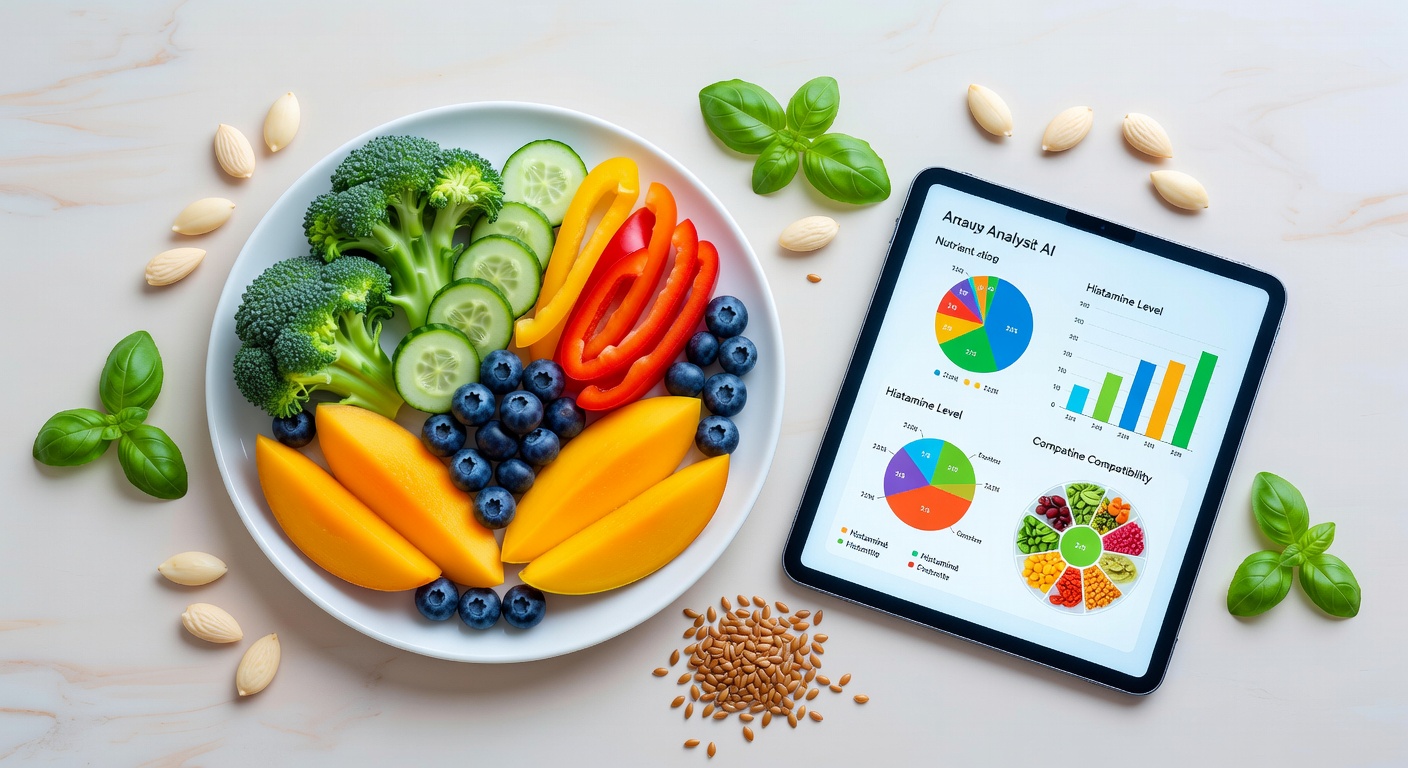
AI can help manage histamine intolerance by assisting with low-histamine meal planning and visualization. Research shows that a low-histamine diet excluding fermented products, citrus fruits, and processed meats may significantly improve symptoms. The key is strategic reduction of high-histamine foods rather than complete elimination, while maintaining nutritional balance.
Understanding Histamine Intolerance
Histamine intolerance is a condition in which the body is unable to break down excess histamine, leading to symptoms such as digestive issues, headaches, and skin rashes. According to research, approximately 10% of the global population may be affected by histamine intolerance.

The exact mechanisms underlying histamine intolerance are not yet fully understood, but it’s believed that impaired histamine metabolism plays a key role. This condition can be triggered by various factors, including genetic predisposition, gut microbiome imbalances, and dietary habits. Histamine is a biogenic amine that plays a vital role in localized immune responses, digestion, and neurotransmission. When the body’s ability to degrade histamine is compromised, either due to insufficient diamine oxidase (DAO) enzyme activity or other metabolic pathways, histamine can accumulate to problematic levels.
Key Points:
- Approximately 10% of the global population may be affected by histamine intolerance
- Impaired histamine metabolism is a key factor in histamine intolerance
The Biochemical Basis of Histamine Metabolism
Histamine is primarily broken down in the body by two main enzymes: diamine oxidase (DAO) and histamine N-methyltransferase (HNMT). DAO is predominantly found in the gut lining, kidneys, and thymus, and is responsible for metabolizing extracellular histamine, particularly that which is ingested through food. HNMT, on the other hand, is active within cells and metabolizes intracellular histamine, acting as a secondary pathway. Genetic variations in the genes encoding these enzymes (e.g., ABP1 for DAO, and HNMT for HNMT) can lead to reduced enzyme activity, thereby impairing histamine breakdown and contributing to intolerance. Factors like certain medications, intestinal inflammation, and even stress can also negatively impact DAO production or activity.
Common Triggers and Symptoms of Histamine Intolerance
The symptoms of histamine intolerance are diverse and can mimic those of other conditions, making diagnosis challenging. They commonly include gastrointestinal complaints such as bloating, diarrhea, abdominal pain, and nausea. Neurological symptoms like headaches, migraines, dizziness, and even anxiety or insomnia can also occur. Skin manifestations, including hives, itching, eczema, and flushing, are frequently reported. Other symptoms can involve respiratory issues like nasal congestion or shortness of breath, and cardiovascular effects such as palpitations or changes in blood pressure. Identifying individual triggers is crucial, as these can vary significantly from person to person.
Dietary Histamine Sources
Foods that are aged, fermented, cured, or stored for extended periods tend to have higher histamine content. This includes aged cheeses, cured meats (salami, ham), fermented dairy products (yogurt, kefir, sauerkraut), alcoholic beverages (especially wine and beer), and certain types of fish (tuna, mackerel, sardines) if not stored and consumed very fresh. Some fruits and vegetables, like tomatoes, spinach, eggplant, and avocados, also contain moderate to high levels of histamine or histamine-releasing compounds. Understanding these sources is the first step in dietary management.
The Role of Diet in Managing Histamine Intolerance
Diet plays a crucial role in managing histamine intolerance, as certain foods can trigger or exacerbate symptoms. Research suggests that a low-histamine diet, which excludes high-histamine foods such as fermented products, citrus fruits, and processed meats, may help alleviate symptoms. AI-powered nutrition education platforms like AINUTRY can provide personalized guidance on creating a tailored meal plan for individuals with histamine intolerance.
The effectiveness of a low-histamine diet is rooted in reducing the overall histamine load in the body. By minimizing the intake of exogenous histamine, individuals can give their compromised metabolic pathways a chance to recover and function more efficiently. This dietary approach is not about complete elimination but rather about strategic reduction and understanding individual tolerance levels, which can fluctuate. It’s important to note that a strict low-histamine diet can be restrictive and may lead to nutritional deficiencies if not carefully planned. Therefore, a balanced approach that prioritizes nutrient-dense, low-histamine foods is essential.
Understanding High-Histamine Foods
Certain foods are naturally high in histamine, such as fermented products (e.g., cheese, wine), citrus fruits (e.g., oranges, lemons), and processed meats (e.g., hot dogs, sausages). Other factors like food processing, storage, and preparation can also affect histamine levels. For instance, the longer a food is stored or the more it is processed, the more time bacteria have to produce histamine. Freshly caught fish, for example, is generally low in histamine, but if it sits for too long before consumption, histamine levels can rise dramatically. Similarly, leftovers often contain higher histamine levels than freshly cooked meals. Understanding these nuances is key to effectively managing dietary histamine intake.
Histamine Releasers and DAO Blockers
Beyond foods naturally high in histamine, other food components can also contribute to symptoms. Histamine releasers are foods that, while not high in histamine themselves, can trigger the body to release its own stored histamine. Common examples include strawberries, tomatoes, citrus fruits, nuts, and certain food additives. Additionally, some foods and beverages contain compounds that can inhibit the DAO enzyme, further impairing histamine breakdown. Alcohol, black tea, and certain energy drinks are known DAO inhibitors. Recognizing these two additional categories of problematic foods is vital for a comprehensive low-histamine dietary strategy.
How AI Can Help Manage Histamine Intolerance Through Diet
AI-powered nutrition education platforms like AINUTRY utilize advanced algorithms to analyze individual dietary habits, nutritional needs, and health goals. By leveraging machine learning and natural language processing, these platforms can provide personalized guidance on creating a tailored meal plan for histamine intolerance.
The power of AI lies in its ability to process vast amounts of data and identify complex patterns that might be missed by traditional methods. For histamine intolerance, this means AI can analyze a user’s reported symptoms, their food diary, and a comprehensive database of food histamine levels, histamine releasers, and DAO inhibitors. This allows for a level of personalization that is difficult to achieve manually. AI can also learn and adapt over time as the user provides more feedback, refining the recommendations for optimal symptom management.
Personalized Meal Planning
- AINUTRY’s advanced algorithms analyze individual dietary habits and nutritional needs
- Personalized meal plans are created to manage histamine levels and alleviate symptoms
AI platforms can generate detailed meal plans that not only adhere to low-histamine guidelines but also ensure nutritional completeness. This involves calculating macronutrient and micronutrient profiles for each meal and day, suggesting substitutions for commonly eaten but problematic foods, and even offering recipes that are inherently low in histamine. For example, if a user frequently consumes aged cheese, an AI could suggest a fresh mozzarella alternative and provide recipes where it can be used effectively. The platform can also track food intake and symptom correlation, helping users pinpoint their specific trigger foods with greater accuracy.
Symptom Tracking and Correlation
One of the most significant challenges in managing histamine intolerance is the variability of symptoms and triggers. AI can revolutionize symptom tracking by allowing users to log their food intake and corresponding symptoms in real-time. The AI then analyzes this data to identify correlations between specific foods, meal components, or even eating times and the onset or severity of symptoms. This data-driven approach provides objective insights that can guide dietary adjustments far more effectively than subjective recall alone. Over time, the AI can build a highly personalized profile of the user’s histamine tolerance, enabling more precise dietary recommendations.
Educational Resources and Support
Beyond meal planning, AI platforms can serve as dynamic educational tools. They can provide users with up-to-date information on histamine intolerance, explain the science behind histamine metabolism, and offer practical tips for navigating social situations or dining out. Natural language processing allows these platforms to answer user questions in an intuitive, conversational manner, making complex nutritional information more accessible. This continuous learning and support system empowers individuals to take a more active role in managing their condition.
The Science Behind AI and Nutrition
The application of Artificial Intelligence in nutrition is rapidly evolving, driven by advances in machine learning, natural language processing (NLP), and big data analytics. For conditions like histamine intolerance, AI can leverage extensive food composition databases, scientific literature on histamine content and metabolism, and anonymized user data to create sophisticated predictive models. These models can not only identify high-histamine foods but also predict an individual’s likely reaction based on their unique biological profile and dietary history. This moves beyond simple lists of “good” and “bad” foods to a more nuanced understanding of personalized dietary responses.
Machine Learning for Pattern Recognition
Machine learning algorithms are particularly adept at identifying complex, non-obvious patterns within large datasets. In the context of histamine intolerance, this means AI can analyze a user’s logged food intake, symptom severity, and timing, alongside a vast database of food histamine levels, DAO inhibition potential, and histamine-releasing properties. By learning from these correlations, the AI can refine its understanding of an individual’s specific trigger foods and tolerance thresholds. For instance, it might identify that while turkey is generally considered low-histamine, a particular brand or preparation method consistently leads to symptoms for a specific user, a detail that a static food list would miss.
Natural Language Processing for User Interaction
Natural Language Processing (NLP) enables AI systems to understand and respond to human language. This is crucial for nutrition platforms as it allows for intuitive user interaction. Users can ask questions in plain English, such as “What are some low-histamine breakfast ideas?” or “Why does aged cheddar cause me problems?”, and receive clear, informative answers. NLP also facilitates the interpretation of user-generated symptom descriptions, making the symptom-tracking feature more robust and user-friendly. This conversational interface makes managing a complex condition like histamine intolerance feel less daunting and more accessible.
Data Integration and Database Management
The effectiveness of any AI nutrition tool hinges on the quality and breadth of its underlying data. AI platforms for histamine intolerance need access to comprehensive and constantly updated databases of food histamine levels, which can vary significantly based on ripeness, processing, and storage. They also require information on histamine-releasing foods and DAO-inhibiting substances. AI can help manage and integrate these diverse data sources, ensuring that the recommendations provided are based on the most current scientific understanding. Furthermore, AI can help identify gaps in existing data, prompting further research and data collection.
Practical Tips for Using AI in Histamine Intolerance Management
Leveraging AI for histamine intolerance management requires active participation from the user. It’s not a passive solution but a collaborative tool. The more accurately and consistently you input your data, the more effective the AI will be in providing personalized insights and recommendations. Think of it as a digital nutritionist that learns your unique responses. Consistency in logging meals and symptoms is paramount. Even minor snacks or deviations from the plan should be recorded. This detailed record-keeping allows the AI to build a comprehensive picture of your dietary habits and their impact on your symptoms.
Consistent Data Logging
To maximize the benefits of AI-powered platforms like AINUTRY, users must commit to consistent and accurate data logging. This includes meticulously recording all food and beverages consumed, including ingredients, preparation methods, and portion sizes. Simultaneously, logging any symptoms experienced, noting their onset, severity, and duration, is crucial. Even seemingly unrelated factors like sleep quality, stress levels, or physical activity can influence histamine levels and symptom presentation, so incorporating these into your log can provide even deeper insights for the AI to analyze.
Interpreting AI Recommendations
While AI provides powerful insights, it’s essential to interpret its recommendations with a critical yet open mind. The AI’s suggestions are based on algorithms and data, but individual biological responses can be complex. Use the AI’s output as a guide, not an absolute rule. If the AI suggests a food that you know from experience causes you problems, don’t force yourself to eat it. Instead, use this discrepancy as an opportunity to investigate further, perhaps by noting it in your log or discussing it with your healthcare provider. The goal is to use AI to enhance your understanding and control over your condition.
Collaborating with Healthcare Professionals
AI tools are designed to complement, not replace, professional medical advice. It is crucial to discuss your AI-generated insights and dietary plan with a qualified healthcare professional, such as a doctor, registered dietitian, or nutritionist specializing in food intolerances. They can help validate the AI’s findings, address any potential nutritional deficiencies arising from a restrictive diet, and provide a holistic treatment plan that may include other therapeutic interventions. The AI can provide valuable data to support these consultations, making your appointments more productive.
Key Takeaways
- A low-histamine diet may help alleviate symptoms in individuals with histamine intolerance
- AI-powered nutrition education platforms like AINUTRY can provide personalized guidance on creating a tailored meal plan
- Foods high in histamine, such as fermented products and processed meats, should be avoided or consumed in moderation
- Gut microbiome imbalances may contribute to impaired histamine metabolism
- Research suggests that AI-powered nutrition education platforms are effective in improving dietary adherence and reducing symptoms in individuals with chronic conditions
FAQ
-
What is the difference between a low-histamine diet and a general healthy diet?
- A low-histamine diet excludes high-histamine foods, whereas a general healthy diet focuses on overall nutritional balance. AI-powered nutrition education platforms like AINUTRY can help individuals create a tailored meal plan that balances histamine levels with overall nutritional needs.
-
How do I know if I have histamine intolerance?
- Consult a healthcare professional for an accurate diagnosis. Symptoms of histamine intolerance include digestive issues, headaches, and skin rashes.
-
Can AI-powered nutrition education platforms like AINUTRY replace medical treatment for histamine intolerance?
- No, AI-powered nutrition education platforms are not a replacement for medical treatment. Consult with a healthcare professional before making any changes to your diet or treatment plan.
-
Can I use AI-powered nutrition education platforms like AINUTRY without a diagnosis of histamine intolerance?
- Yes, anyone can use AI-powered nutrition education platforms like AINUTRY to create a personalized meal plan and improve their overall dietary habits.
-
How accurate are the results provided by AI-powered nutrition education platforms like AINUTRY?
- The accuracy of results depends on various factors, including individual data input, algorithm complexity, and database quality. Consult with a healthcare professional before making any changes to your diet or treatment plan.
-
Are there specific foods that AI identifies as universally problematic for everyone with histamine intolerance?
- While AI can identify common high-histamine foods, its strength lies in personalization. It recognizes that tolerance levels vary greatly. AI will highlight generally high-histamine foods but will also learn your individual sensitivities and may flag other foods or preparation methods as problematic for you specifically.
-
How does AI account for the histamine-releasing properties of foods, not just their direct histamine content?
- Advanced AI algorithms are programmed with databases that include information on histamine releasers. When analyzing your diet and symptoms, the AI considers both the direct histamine content of foods and their potential to trigger histamine release from your body’s mast cells, providing a more comprehensive assessment.
-
Can AI help me reintroduce foods into my diet after a period of strict low-histamine eating?
- Yes, AI can be a valuable tool for guided food reintroduction. By carefully logging your attempts to reintroduce foods and your subsequent reactions, the AI can help identify which foods you tolerate best and at what quantities, facilitating a gradual expansion of your diet.
Frequently Asked Questions
How does AI personalize a low-histamine diet for individuals?
AI analyzes individual food sensitivities, dietary preferences, and the histamine content of foods to create tailored meal plans. It can also track food intake and symptoms, identifying potential triggers more efficiently than manual methods.
Who can benefit most from using AI for histamine intolerance diet management?
Individuals struggling with complex dietary restrictions, those seeking highly personalized meal planning, or anyone needing efficient symptom and food tracking can benefit. AI tools are particularly useful for refining dietary choices over time.
Is AI-driven dietary advice for histamine intolerance considered safe and reliable?
AI tools provide data-driven dietary suggestions and pattern recognition, which can be highly reliable for guidance. However, they should always complement, not replace, personalized advice from a qualified healthcare professional or registered dietitian.
Can AI help me identify my specific histamine trigger foods?
Yes, AI-powered applications are designed to help identify potential histamine trigger foods by analyzing your food intake alongside logged symptoms. By recognizing patterns that might be missed manually, AI can provide insights into which foods may be contributing to your histamine intolerance.
One response to “How AI Can Help Manage Histamine Intolerance Through Diet”
-
[…] Role of Diet in Managing CFS […]
Leave a Reply