
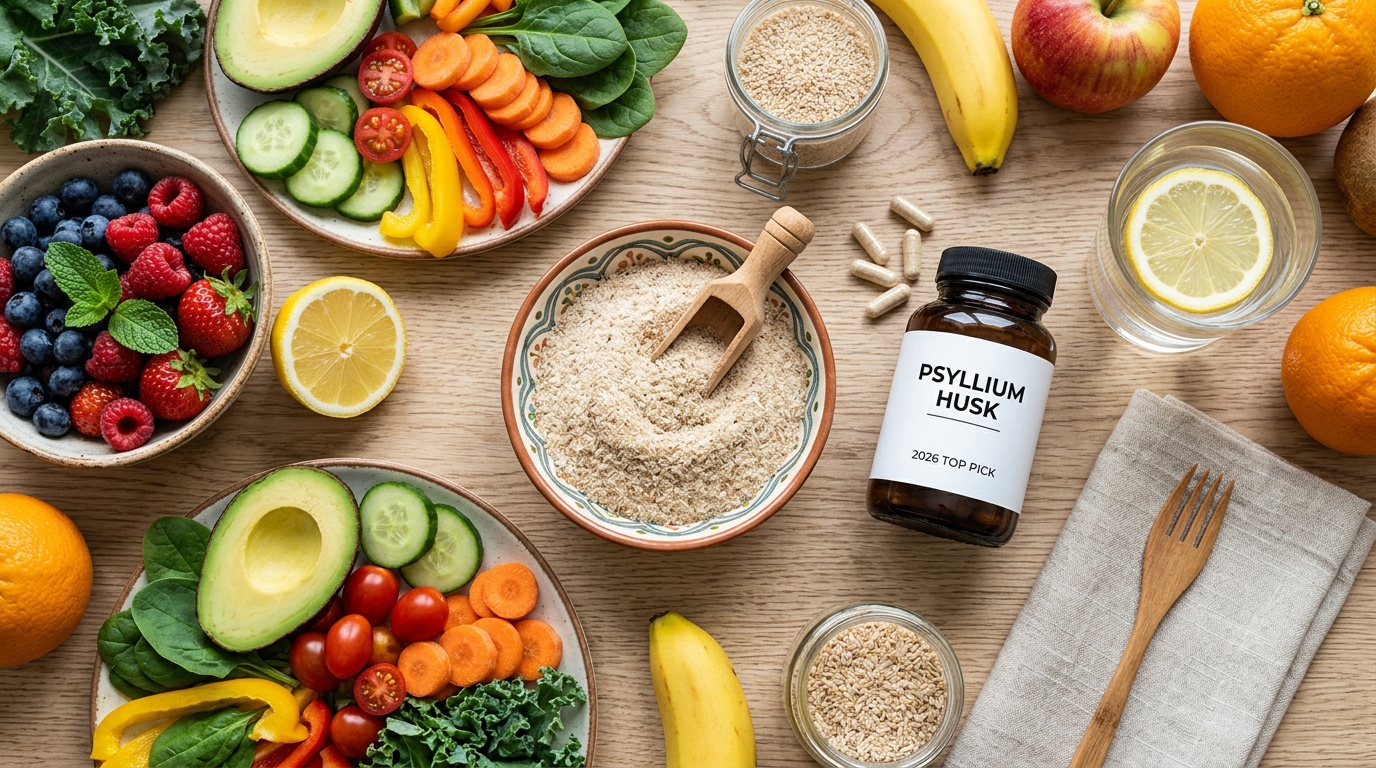
For millions worldwide, digestive discomfort is a daily reality, often stemming from insufficient dietary fiber intake. Psyllium husk, a natural, soluble fiber derived from the seeds of the Plantago ovata plant, offers a powerful, science-backed solution. Studies show that regular psyllium husk supplementation can improve stool consistency and frequency by up to 50% in individuals experiencing constipation, significantly enhancing overall gut health and quality of life.
Quick Comparison: Top 5 Psyllium Husk Digestive Health Supplements
| Product | Key Ingredient | Dose | Best For | Price Range |
|---|---|---|---|---|
| NutraBoost Organic Psyllium Husk Powder | Organic Psyllium Husk | 5-10g daily | Versatile use, mixing into drinks/food | $18 – $28 |
| Digestive Harmony Psyllium Capsules | Psyllium Husk Powder | 2-4 capsules (1-2g fiber) daily | Convenience, precise dosing | $20 – $32 |
| Pure Fiber Gold Psyllium Seed Husk | Whole Psyllium Seed Husks | 5-7g daily | Maximum bulk-forming effect, natural texture | $16 – $25 |
| GutRenew Psyllium Fiber Blend | Psyllium Husk, Inulin, Flaxseed | 8g daily | Comprehensive gut support, prebiotic benefits | $25 – $40 |
| Ultimate Digestion Psyllium & Probiotic Formula | Psyllium Husk, Probiotic Blend | 6g daily | Targeted support for gut flora and regularity | $30 – $45 |
Why This Matters: The Science Behind Psyllium Husk Digestive Health
Psyllium husk is renowned for its remarkable capacity to promote digestive health, primarily due to its high soluble fiber content. When mixed with water, psyllium forms a viscous gel that bulks up stool and softens it, making it easier to pass. This mechanism addresses common digestive issues such as constipation, providing a gentle yet effective laxative effect without the harshness often associated with stimulant laxatives. Beyond simple regularity, psyllium also plays a crucial role in maintaining a healthy gut microbiome, acting as a prebiotic that feeds beneficial gut bacteria.
Research consistently highlights psyllium’s efficacy. A comprehensive review by Lambeau and McRorie (2017) published in the *British Journal of Nutrition* underscored psyllium’s benefits, noting its significant impact on improving stool consistency and frequency in individuals with both constipation and diarrhea-predominant irritable bowel syndrome (IBS). The authors emphasized psyllium’s ability to normalize bowel function, making it a valuable tool for managing various functional bowel disorders. Its gel-forming properties contribute to a slower transit time in cases of diarrhea, helping to solidify loose stools, while simultaneously accelerating transit in constipation by adding bulk and moisture.
Further supporting its digestive prowess, a study by Marlett, Kajs, and Fischer (2002) in the *Journal of the American Dietetic Association* demonstrated that psyllium, as an unfermented gel-forming fiber, significantly increases fecal water content and reduces stool transit time in healthy adults. This dual action of increasing moisture and facilitating movement through the colon is key to its effectiveness. Unlike some other fibers, psyllium is minimally fermented in the large intestine, which means it produces less gas and bloating, making it a well-tolerated option for many individuals sensitive to other fiber types. Its ability to create a healthy internal environment supports not just regularity, but also the overall integrity and function of the gastrointestinal tract, contributing to long-term digestive wellness.
Our Top 5 Picks – Reviewed
NutraBoost Organic Psyllium Husk Powder
NutraBoost offers a high-quality organic psyllium husk powder, making it a top choice for those seeking purity and versatility. Sourced from certified organic farms, this product ensures you’re getting psyllium free from pesticides and harmful chemicals. Its fine powder consistency mixes easily into water, juice, or smoothies, though a quick stir and immediate consumption are recommended before it gels too much. It’s ideal for individuals who prefer to customize their fiber intake and incorporate it seamlessly into their daily routine. The bulk powder format also often provides excellent value per serving.
- Certified organic and non-GMO.
- Highly versatile for mixing into various liquids and foods.
- Cost-effective for regular, long-term use.
- Can become thick quickly if not consumed promptly.
- Requires measuring, less convenient than capsules for some.
Digestive Harmony Psyllium Capsules
For those who prioritize convenience and precise dosing, Digestive Harmony Psyllium Capsules are an excellent option. Each capsule typically contains a standardized amount of psyllium husk, eliminating the need for measuring powders and making it easy to take on the go. This product is particularly suitable for individuals who dislike the texture or mixing process of psyllium powder. The capsules are designed to dissolve effectively in the digestive tract, releasing the psyllium to form its beneficial gel. They are also a great choice for travel or for maintaining a consistent fiber regimen without interruption.
- Extremely convenient and easy to take anywhere.
- Provides precise, pre-measured dosages.
- No taste or texture issues, ideal for sensitive palates.
- Requires taking multiple capsules for a full dose.
- Generally more expensive per serving than powder forms.
Pure Fiber Gold Psyllium Seed Husk
Pure Fiber Gold offers whole psyllium seed husks, providing a coarser, more natural form of the fiber. This product is ideal for users who prefer a less processed option and appreciate the robust bulk-forming capacity of whole husks. While it may require more liquid and a slightly longer time to fully hydrate compared to powders, the whole husks are known for their strong gel-forming properties, which can be highly effective for promoting regularity and satiety. It’s a no-frills, pure product for those focused solely on the benefits of psyllium in its most natural state, often preferred for its maximal expansion capacity.
- Less processed, whole seed husks for maximum natural fiber.
- Excellent bulk-forming properties for regularity.
- Often a budget-friendly option for pure psyllium.
- Texture can be more noticeable than fine powders.
- May require more mixing effort and liquid.
GutRenew Psyllium Fiber Blend
GutRenew Psyllium Fiber Blend goes beyond just psyllium by incorporating other beneficial fibers like inulin and flaxseed. This synergistic blend offers a more comprehensive approach to gut health, combining psyllium’s bulk-forming power with the prebiotic benefits of inulin and the omega-3 fatty acids and soluble fiber from flaxseed. It’s an excellent choice for individuals looking for multi-faceted digestive support, including promoting a healthy gut microbiome and reducing inflammation. The blend is carefully formulated to provide a balanced fiber intake that supports overall digestive wellness and can be a good starting point for those new to fiber supplementation who want broad benefits.
- Combines psyllium with other beneficial fibers (inulin, flaxseed).
- Offers comprehensive gut health support, including prebiotic effects.
- Enhanced nutritional profile with omega-3s from flaxseed.
- Might be less suitable for those sensitive to other fiber types.
- Potentially higher cost due to multiple ingredients.
Ultimate Digestion Psyllium & Probiotic Formula
Ultimate Digestion Psyllium & Probiotic Formula provides a powerful combination of psyllium husk and a targeted blend of probiotics, making it an all-in-one solution for optimal digestive and gut flora health. This supplement is designed to not only improve regularity through psyllium’s bulk-forming action but also to fortify the gut with beneficial bacteria. It’s particularly beneficial for individuals experiencing dysbiosis or those looking to support their gut microbiome alongside fiber intake. The inclusion of probiotics helps to balance the gut environment, potentially reducing symptoms like bloating and gas while enhancing nutrient absorption. This formula represents a holistic approach to digestive wellness.
- Combines fiber and probiotics for comprehensive gut support.
- Supports both regularity and a healthy gut microbiome.
- Ideal for those seeking to restore gut balance.
- Higher price point due to the inclusion of probiotics.
- Probiotic strains may not be suitable for all individuals.
How to Choose the Best Product
Key Ingredients to Look For
When selecting a psyllium husk supplement, the primary ingredient you’re looking for is, naturally, psyllium husk itself. However, subtle differences in its form and quality can significantly impact your experience and the supplement’s effectiveness. Look for products that clearly state “psyllium husk powder” or “whole psyllium husks.” Organic certification is a strong indicator of quality, ensuring the product is free from pesticides and herbicides, which is particularly important for something you consume daily. Purity is paramount; ideally, the product should contain 100% psyllium husk with minimal to no added ingredients, especially if you have sensitivities. Some formulations may include additional beneficial ingredients like prebiotics (e.g., inulin, FOS) or probiotics. These can enhance the gut health benefits, but ensure they are clearly listed and their purpose understood. Avoid products with excessive artificial sweeteners, colors, or flavors if you prefer a natural approach. For powders, consider the fineness of the grind; finer powders mix more smoothly but may gel faster, while coarser husks provide a more robust bulk. Always check for third-party testing certifications, which confirm purity and potency, giving you peace of mind about what you’re consuming.
Red Flags to Avoid
Navigating the supplement market requires a keen eye for potential red flags. First and foremost, be wary of proprietary blends that do not fully disclose the amounts of each ingredient. While psyllium husk is often listed, if it’s part of a blend, you might not be getting an efficacious dose of psyllium or other components. Another major red flag is the presence of excessive fillers, artificial sweeteners, colors, or unnecessary additives. These can dilute the active ingredient, potentially cause digestive upset, or simply add chemicals you don’t need. Underdosed products are also a concern; if a supplement promises benefits but provides significantly less than the evidence-based daily recommendation for psyllium (typically 5-10 grams), it’s unlikely to be effective. Be cautious of brands making exaggerated or unsubstantiated claims without any scientific backing. Finally, a lack of transparency regarding sourcing, manufacturing practices, or third-party testing should raise suspicion. Reputable brands are generally open about their processes and quality control measures.
Dosage and Timing
The evidence-based dosage for psyllium husk typically ranges from 5 to 10 grams per day, though some individuals may benefit from slightly higher amounts under professional guidance. It’s crucial to start with a lower dose, such as 2.5-5 grams once or twice daily, and gradually increase it over several days or weeks. This allows your digestive system to adapt and minimizes potential side effects like bloating or gas. Psyllium should always be taken with a full glass (8 ounces or 240ml) of water or other liquid. Taking it without sufficient fluid can cause the psyllium to swell in the esophagus, potentially leading to choking or obstruction. It can be taken at any time of day, but many find it convenient to take it with meals or between meals. If you’re taking other medications, it’s advisable to take psyllium at least 1-2 hours before or after them, as its gel-forming properties can interfere with the absorption of other drugs. Consistency is key for optimal results, so incorporating it into a daily routine is recommended.
Safety and Side Effects
Psyllium husk is generally considered safe for most healthy adults when taken as directed. However, like any supplement, it can have side effects and interactions. The most common side effects are mild and related to its fiber content, including bloating, gas, and abdominal cramps, especially when first starting or increasing the dose too quickly. These symptoms usually subside as the body adjusts. It is paramount to consume psyllium with adequate water to prevent the fiber from swelling and potentially causing choking or bowel obstruction. Individuals with pre-existing swallowing difficulties, esophageal narrowing, or intestinal blockages should absolutely avoid psyllium husk unless specifically advised by a healthcare professional.
Psyllium can also interact with certain medications. Its bulking and gelling properties can reduce the absorption of some drugs, including certain antidepressants, cholesterol-lowering medications (like statins), blood thinners (warfarin), and diabetes medications, potentially making them less effective. Therefore, it’s generally recommended to take psyllium at least 1-2 hours before or after other medications. Individuals with diabetes should also monitor their blood sugar levels closely, as psyllium can affect glucose absorption. Pregnant or breastfeeding women, children, and individuals with chronic medical conditions should always consult a qualified healthcare provider before starting psyllium husk supplementation to ensure it is appropriate and safe for their specific circumstances.
Frequently Asked Questions
Q: How long does it take for psyllium husk to work?
Typically, the effects of psyllium husk on bowel regularity can be noticed within 12 to 72 hours of initial use. For consistent and long-term digestive health benefits, daily use over several weeks is often recommended. Individual results may vary based on diet, hydration, and existing digestive conditions.
Q: Can psyllium husk help with weight management?
Yes, psyllium husk can indirectly support weight management. Its soluble fiber creates a feeling of fullness and satiety, which can help reduce overall calorie intake by curbing appetite. By promoting regularity and healthy digestion, it also supports a well-functioning metabolism.
Q: Is psyllium husk gluten-free?
Pure psyllium husk is naturally gluten-free, as it comes from the Plantago ovata plant and not grains. However, it’s always advisable to check product labels for certification or statements confirming it is processed in a gluten-free facility, especially for individuals with severe gluten sensitivities or celiac disease.
Q: Can I take psyllium husk every day?
Yes, psyllium husk is generally safe for daily, long-term use for most healthy individuals. Many people incorporate it into their daily routine to maintain regularity and overall digestive health. Always ensure adequate fluid intake when taking it regularly.
Q: What’s the difference between psyllium husk powder and whole psyllium husks?
Psyllium husk powder is a finer grind of the psyllium husk, which tends to mix more smoothly and gel faster. Whole psyllium husks are less processed, coarser, and may provide a slightly stronger bulk-forming effect due to their larger particle size, though both forms are effective.
Key Takeaways
- Psyllium husk is a highly effective soluble fiber for promoting digestive regularity and gut health.
- Always consume psyllium with ample water to prevent choking or obstruction.
- Start with a low dose and gradually increase to allow your body to adapt.
- Choose organic, pure psyllium husk products to avoid unnecessary additives.
- Be mindful of potential interactions with medications; consult a doctor if on prescription drugs.
- Consistent daily use yields the best long-term benefits for digestive wellness.
Frequently Asked Questions
What is the recommended daily dosage of psyllium husk for digestive health?
For most adults, a typical starting dose is 5-10 grams (about 1-2 teaspoons) mixed with water, taken once or twice daily. It’s crucial to start with a lower dose and gradually increase it to allow your body to adjust and minimize potential digestive discomfort.
When is the best time to take psyllium husk supplements?
Psyllium husk can be taken at any time of day, but many find it beneficial to take it with or between meals. Ensure you consume it with a full glass of water and drink plenty of fluids throughout the day to prevent constipation or blockages.
Are there any side effects or safety concerns when taking psyllium husk?
Common side effects include mild bloating, gas, or stomach cramps, especially when first starting or if not consumed with enough water. Serious side effects like allergic reactions or intestinal blockages are rare but possible, particularly if taken without adequate fluid intake.
Who can benefit most from psyllium husk, and who should avoid it?
Psyllium husk is highly beneficial for individuals seeking to improve regularity, relieve constipation, or manage mild diarrhea due to its bulk-forming properties. However, those with swallowing difficulties, intestinal blockages, or certain medical conditions should consult a doctor before use.
What are some natural alternatives to psyllium husk for improving digestive health?
Other effective fiber sources include glucomannan, methylcellulose, and flaxseed, which also act as bulk-forming laxatives. Additionally, increasing dietary fiber through fruits, vegetables, and whole grains, along with adequate hydration, is fundamental for digestive health.
Disclaimer: This article is for informational purposes only and does not constitute medical advice. Consult a qualified healthcare provider before starting any supplement regimen.
Leave a Reply